When Philippine Educational Theater Association (PETA) first launched Control + Shift in 2024, it was easy to frame it as the company’s answer to the Virgin Labfest — a platform for new works. But two years on, that comparison no longer quite fits.
Control + Shift has evolved into something broader: not just a showcase of one-act plays, but a full-fledged theater festival with its own identity and intent.
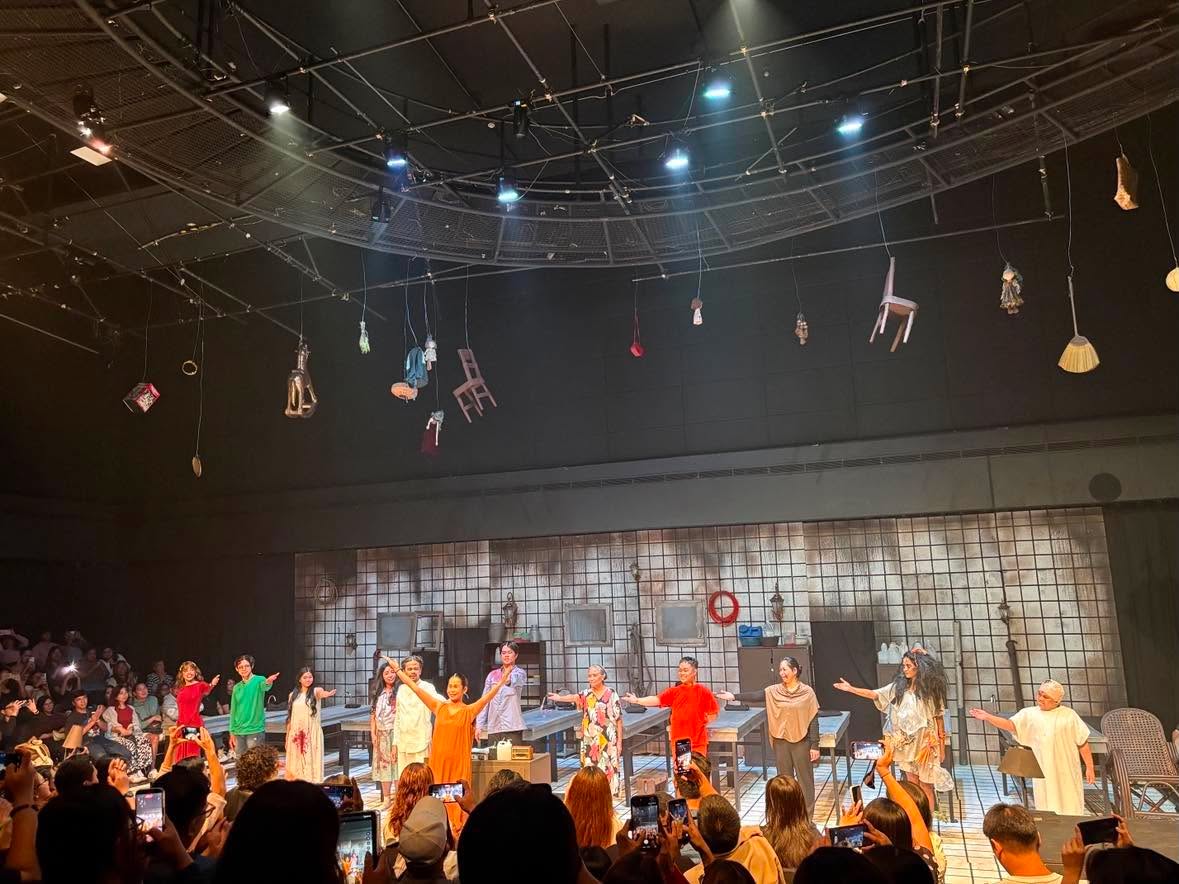
This year’s edition reflects that shift. Instead of eight new works, the lineup is more curated — four pieces in total, including two from previous editions. While still works-in-progress, both pieces have proven themselves strong enough to endure and even expand.
READ: Three plays, one long day: From PETA’s youthful pulse to Ateneo’s ‘Sisa’
The result is a program that balances new voices with sustained conversations.
Power in practice
Set A leans into PETA’s activist roots, carrying the theme “When Power Falls Into Our Hands.” The two plays here are more text-driven, more recognizably PETA in their approach to political engagement.

In “Cleaners,” written by Jhudiel Clare Sosa and directed by Julio Garcia, what begins as a familiar setup — a strict teacher, a disciplinary system built on control — gradually reveals itself as an allegory for state violence. The mantra “Ang hindi malinis, nililigpit” echoes the logic of the drug war, a chilling undercurrent that becomes explicit when the students stumble upon a classmate’s body.
Yet the production resists becoming didactic. There is humor here — physical, almost absurd at times, reminiscent of ‘Weekend at Bernie’s” — that allows the audience to engage before the weight of its message fully lands. It’s a careful balance, one that keeps the play accessible without dulling its critique.

If “Cleaners” invites reflection, “Monit-oh, Monit-ah” pushes further into participation.
Written by Herlyn Alegre and directed by Norbs Portales, the piece unfolds in a restaurant setting — a microcosm of everyday systems where corruption quietly thrives. But this is not a passive viewing experience. Designed as forum theater, it invites the audience to intervene, to vote, and even to halt the action entirely in order to redirect the narrative.
In doing so, the play shifts the audience’s role from observer to participant. It becomes a rehearsal space for civic action, mirroring the frustrations of real-world political inertia while offering, at least within the theater, the possibility of agency. It is perhaps the most explicitly educational piece in the lineup, but also one of the most memorable for the way it implicates its viewers.
Surviving
If Set A is grounded in dialogue and discourse, Set B moves in a different direction altogether. Under the theme “When Care Becomes Survival,” both pieces here lean into movement-based storytelling, expanding the festival’s formal range.

“At Nagkatawang-tao ang Verbo,” written by Mikaela Regis and directed by Anthony Cruz, fuses movement with text and ritual. Drawing from the Lenten tradition of the pabasa, it overlays religious imagery onto an environmental narrative centered on the communities along Ilog Tullahan in Navotas. Issues of reclamation, pollution, and displacement are refracted through the suffering of Christ, creating a parallel that is both striking and provocative.
The piece does not shy away from its intent. It is advocacy-driven, rooted in real communities and real struggles. As shared in the talkback, it has already been performed for the affected communities themselves — serving not just as representation, but as a form of solidarity. Whether it succeeds in effecting tangible change remains an open question, but its power lies in its ability to raise awareness and reframe the conversation.

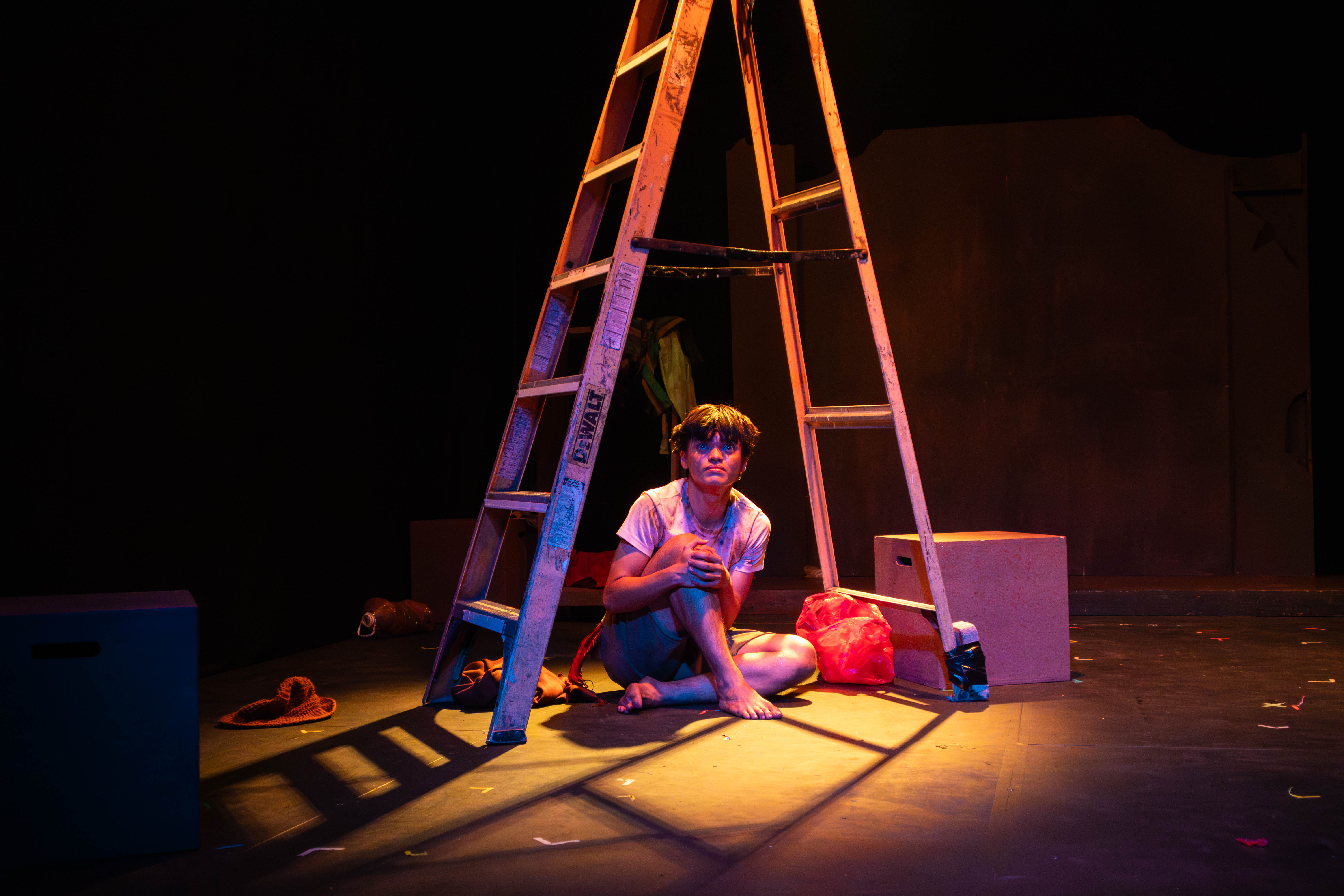
In contrast, “Baga ng Gumuguhong Langit,” directed by Ian Segarra, is a wordless work that follows three children navigating the ruins of war. Stripped of dialogue, the piece relies entirely on movement, gesture, and live sound. The absence of a fixed setting allows it to resonate beyond any single geography, though its echoes are unmistakable in a world marked by ongoing conflicts — from Gaza to Iran and beyond.
What makes the piece particularly striking is its soundscape. Rather than relying on a formal musical score, it uses mostly live, incidental sound, performed in real time by Ada Tayao. The effect is immersive and immediate, heightening the emotional impact of the choreography. It is a heavy, affecting work, one that lingers long after it ends.
Beyond the festival
Taken together, Control + Shift — with its tagline “Changing narratives” — is less about individual works and more about collective purpose. It is an assertion of theater as a living, responsive medium, one that does not merely reflect society but actively engages with it.
It moves beyond the idea of a developmental platform for new writing and into something more expansive: a space where stories are not only told, but interrogated, reshaped, and, perhaps, reclaimed.
More than a celebration of craft, Control + Shift is a call to pay attention, to participate, and ultimately, to change.
Control + Shift has two remaining show dates on April 18 and April 19 at 2 p.m. and 7 p.m. at the PETA Studio Theater, Quezon City.
This review was originally published in ABS-CBN.com.

Leave a Reply