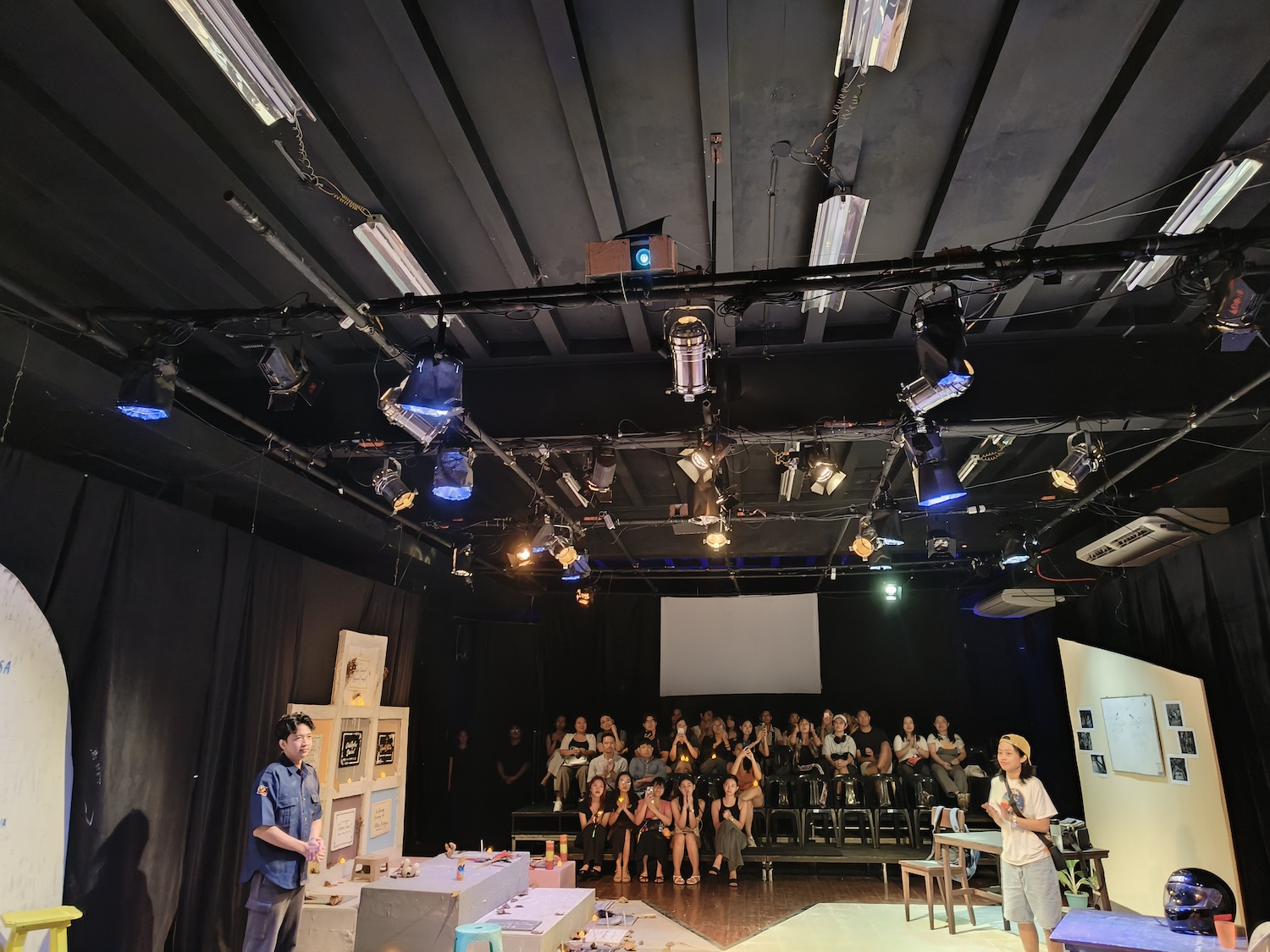
What was supposed to be a simple trip back to UP turned into an entire day of reconnecting — with familiar spaces, with student theater, and with stories that somehow hit harder now than they did years ago.
I started the afternoon at Gyud Food, grabbing lunch at Flipside Burgers before heading to Pavilion 3 for a thesis production of “Tao Po.”
‘Tao Po’
I first saw “Tao Po” in 2017 at the Cultural Center of the Philippines. At the time, it was a one-woman show led by Mae Paner, consisting of four monologues tackling the brutal realities of the Duterte administration’s drug war.
Back then, the wounds were still fresh. It was only around a year into Duterte’s presidency, at the height of the killings and the fear surrounding the anti-drug campaign. The play felt urgent, angry, openly confrontational. More than anything, it was protest theater — a way to humanize the victims and give faces to stories that were too often reduced to statistics and headlines.
Almost a decade later, “Tao Po” feels completely different. Watching it now, especially at a time when conversations about the drug war have resurfaced because of the ICC case against former president Rodrigo Duterte, the play no longer feels simply like protest. It feels like a chronicle.
I had watched the production just a day after Senator Alan Peter Cayetano described the drug war as “pro-life,” and hearing those monologues again brought back memories of the anger and sadness many Filipinos carried during those years.
But now there is distance, reflection and hindsight.
One of the most moving ideas in the play is that the people from the “laylayan” — those who are often ignored or forgotten — were finally being spoken about and remembered. Nearly 10 years later, that line lands with even more weight. The stories now feel less like immediate outrage and more like testimony.

This particular production also convinced me that perhaps this was how playwright Maynard Manansala had originally envisioned the piece.
Unlike the original staging anchored entirely on Paner’s performance and persona, this version split the monologues between one female actor (Sam Silva) and one male actor (Yshma Aquino), each taking on roles aligned with their gender, which worked remarkably well.
Paner’s celebrity and activism gave the original production its urgency and visibility at the time, helping bring the play to audiences here and abroad. But this student production allowed the characters to breathe differently.
The third vignette, in particular — involving a hitman — became far more chilling here than I remembered. In the earlier version, it felt like a difficult role to sustain within the limitations of a one-woman setup. But with a male actor inhabiting the role fully, the character became disturbingly human and grounded, adding another layer to the play’s moral complexity.
And for a thesis production, the technical work here was exceptional. The sound design by Sophia Evangelista especially stood out. If I were grading it, I would honestly give it a flat 1.0.
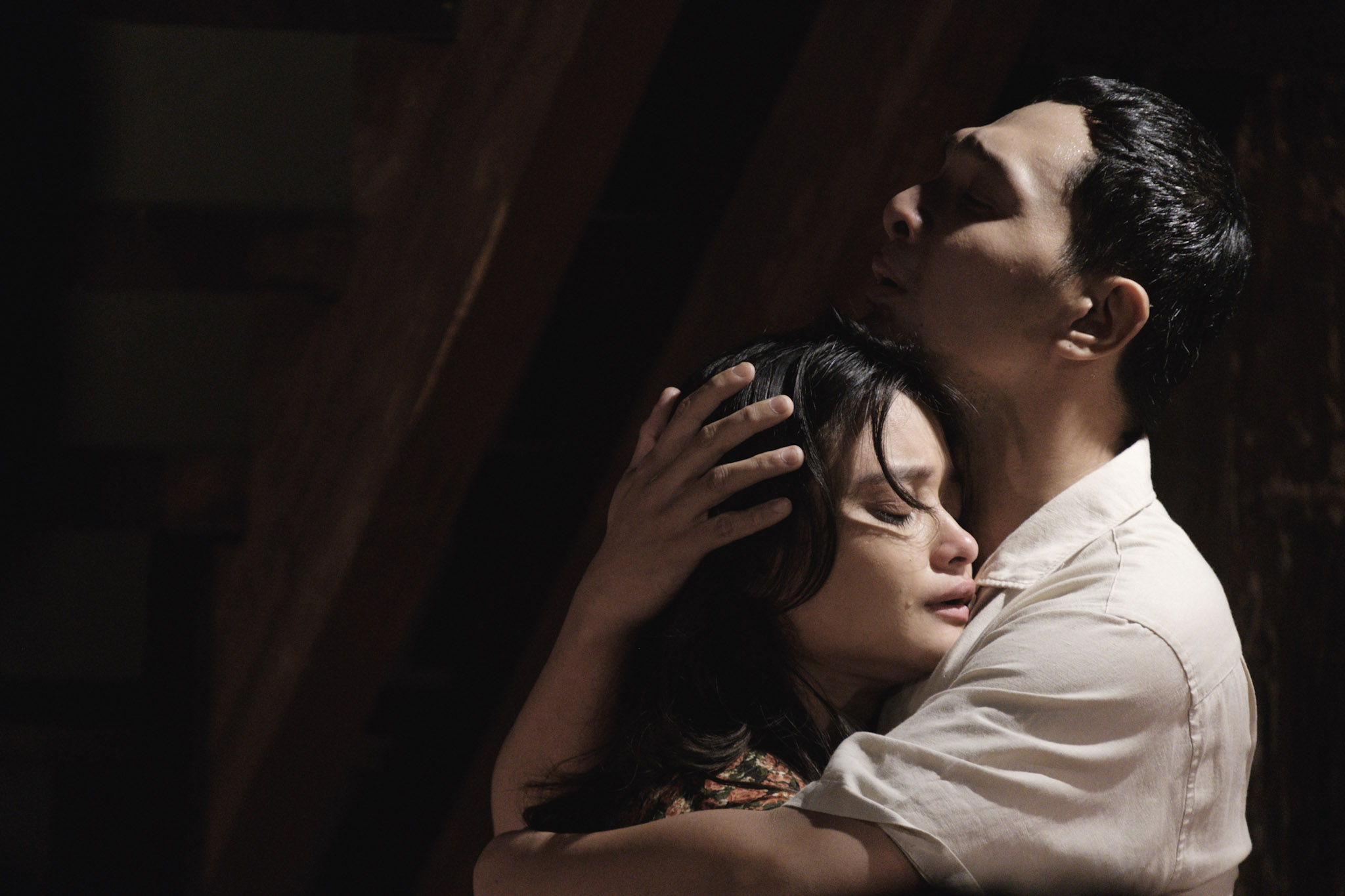
One directorial choice I particularly loved came during the vignette inspired by photojournalist Raffy Lerma and his iconic “Pieta” photograph. The production recreated the image onstage, with Aquino as the wife cradling her dead husband while bursts of sound and light simulated relentless camera flashes.
What struck me was how invasive the moment felt. The flashes never seemed to stop. The audience was forced into the position of witness, almost complicit observers intruding into private grief. It was haunting, and Aquino carried the scene beautifully.
Honestly, it is a shame this was only a thesis production because “Tao Po” deserves another major restaging, especially as the play approaches its 10th anniversary next year.
‘Kapeng Barako Club’
I thought my theater day would end there.
But while I was already in UP, playwright Juan Ekis posted about a performance later that evening of his play “Kapeng Barako Club,” staged by UP students at Dark Roast along Maginhawa.

Unlike “Tao Po,” this was not a thesis production but a final project for a theater class. Like many previous stagings of the play, it was performed inside an actual coffee shop, which immediately creates a certain intimacy between the actors and the audience.
Before the show started, I found myself seated beside Ekis himself, who shared that this particular version was actually closest to the original script he submitted to the Palanca Awards years ago — the same script that eventually won.
I had seen “Kapeng Barako Club” before at Cafe Shyloh in another staging, but these students genuinely surprised me as they outdid that one in almost every aspect.
More than anything, they simply understood the rhythm of the characters and their relationships. You could genuinely believe they were friends. Their chemistry felt effortless, and because of that, the jokes and emotional beats landed naturally. Even though I already knew many of the lines and exchanges, I still found myself reacting and laughing alongside the crowd.
That is the magic of intimate theater spaces. Sitting inside a coffee shop while the actors performed only a few feet away made it feel like you were eavesdropping on another barkada’s conversation.

And despite being written around 15 years ago, the play still resonated strongly with the young audience watching that night.
Its themes — unrequited love, friend zones, emotional repression, uncertainty after college — remain universal, especially for people navigating early adulthood. In many ways, it reminded me of “Friends,” except rooted firmly in a Filipino middle-class experience.
At one point, I suggested to Ekis that maybe instead of writing a sequel, he should consider a prequel, exploring how the barkada first formed, probably back in college. There is something deeply recognizable about that phase of life — the friendships, the awkwardness, the hidden feelings — that I think many audiences would still connect with today.
By the end of the night, I found myself simply grateful. Grateful that student theater remains fearless, inventive, and emotionally honest. And grateful that even after all these years, UP still has a way of making you stumble into conversations, performances, and moments that stay with you long after you leave campus.
What a Sunday!


Leave a Reply