It started at 9 a.m., before most Saturdays properly begin, with a room full of students — many clearly watching live theater for the first time — and their attentiveness was quietly moving. If there’s an ideal way to introduce young audiences to theater, Philippine Educational Theater Association’s (PETA) twin bill of “Kislap at Fuego” and “Children of the Algo” comes close to perfect.
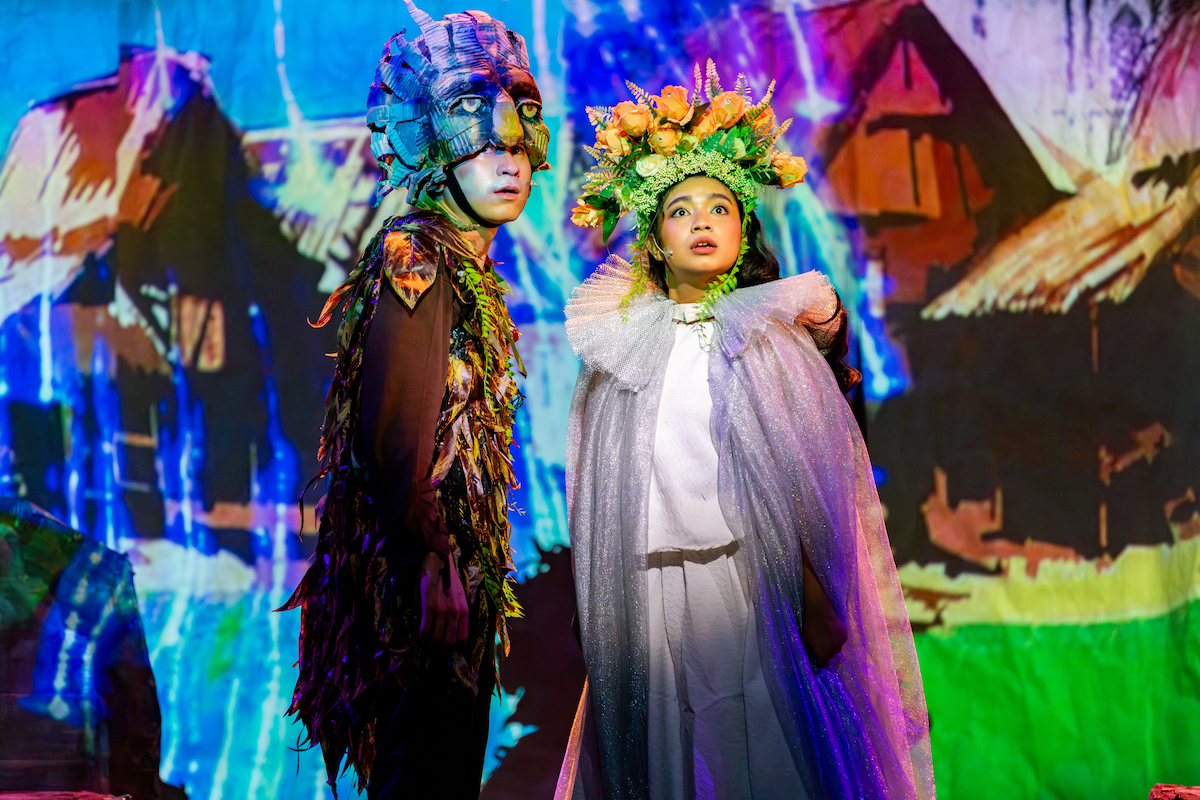
I’ll start with “Kislap at Fuego.” I first encountered this work in 2024 as a lab performance upstairs at PETA, when it was still rough around the edges. This fully staged iteration represents a significant leap forward. While the earlier version had the undeniable draw of real-life couple Kim Molina and Jerald Napoles — Molina in particular was excellent — I found this production, led by CJ Navato and Felicity Kyle Napuli, clearer and more cohesive in articulating the play’s ideas.
The material itself is ambitious and not exactly straightforward. Dominique La Victoria blends Philippine mythology — diwatas, kapres — with the historical reality of the Philippine Revolution, even weaving in references to “Noli Me Tangere.” On paper, it risks reading like historical fan fiction. Onstage, however, it comes together with surprising confidence, even landing as a kind of kilig-inflected romantic comedy. The student audience responded strongly, proof that the storytelling connects. The set is spare but flexible, effectively evoking both forest and town, while the use of shadow puppetry in flashback sequences adds visual texture. What emerges is a tightly constructed piece that feels ready for regular repertory life at PETA.

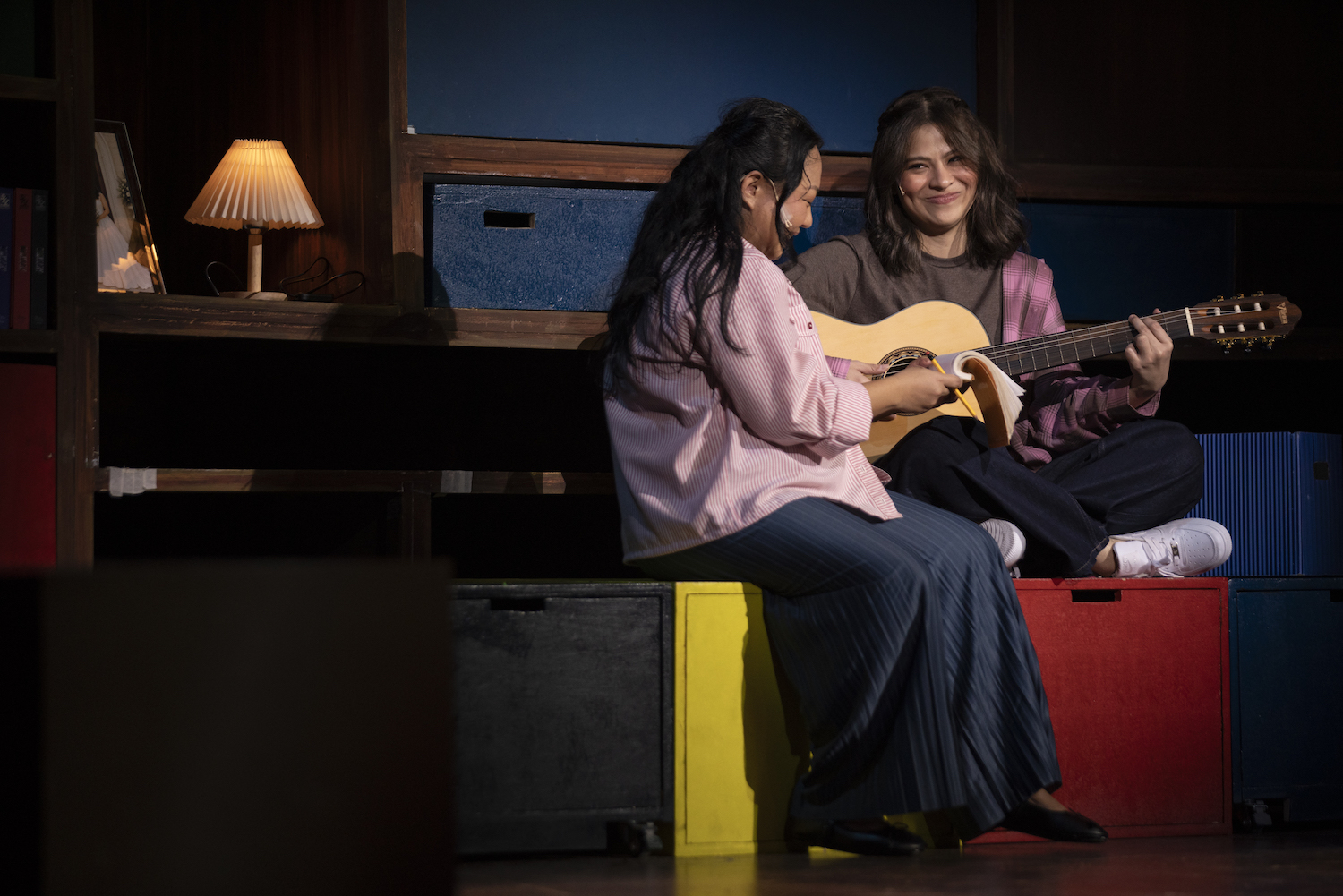
“Children of the Algo” followed, and my initial impression from 2024 — that this was the more immediately striking work — still holds, even if “Kislap at Fuego” proved more surprising this time around. What distinguishes “Children of the Algo” is how rare it is to see a play that captures Gen Z and influencer culture without condescension or awkward over-explanation. The characters may be archetypal, but they reflect recognizable online and offline subcultures, and the language feels lived-in rather than studied. It doesn’t feel like older generations attempting to decode Gen Z; instead, it suggests genuine familiarity and empathy.
The performances are uniformly strong, with the cast fully inhabiting the rhythms and tics of their roles. What I hope resonates most — especially with younger audiences — is the play’s central provocation: the urgency of breaking free from algorithm-driven echo chambers, stepping away from curated online identities, and reconnecting in the real world to effect meaningful change. That idea gives the play its bite and relevance.
Kudos to PETA for reviving both works and allowing them to reach a more fully realized form. Together, they make a compelling case for theater as both an entry point and a mirror for younger audiences.

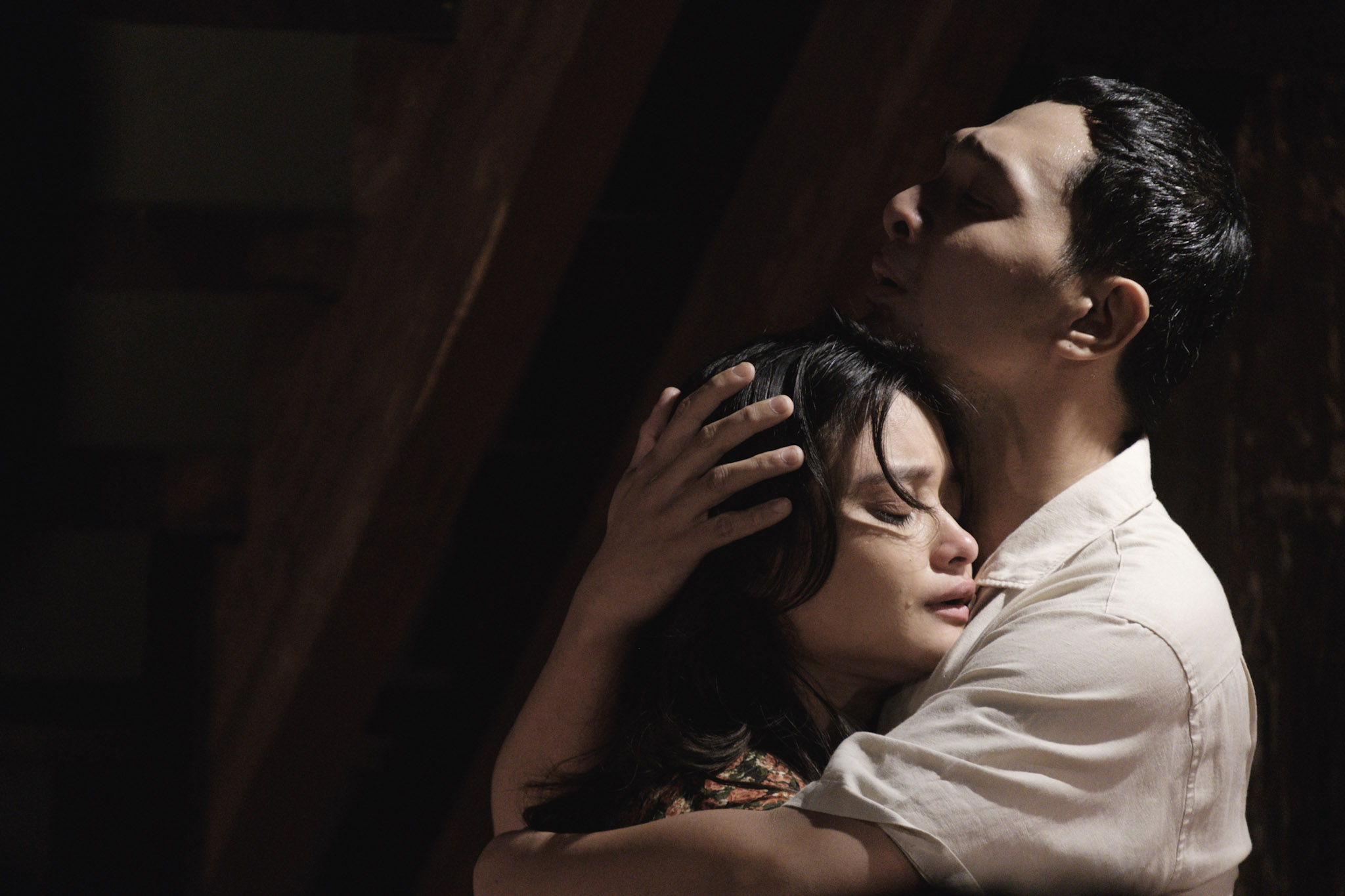
The day ended at the Ateneo with “Sisa: Panaghoy ng Pinakamiserableng Babaeng Katha ni Rizal,” a one-woman piece first presented in shorter form at the Frankfurt Book Fair as a protest performance responding to the organizers’ stance on Palestine.
The work is deliberately meta: Sisa steps out of her role in “Noli Me Tangere” to interrogate her place in history, then expands into a broader symbol of mothers who have lost children to violence and war. One of the most affecting moments came not from the stage but the audience, when a Palestinian viewer became visibly emotional, sharing how the piece made her feel seen and heard. Moments like that are potent reminders of theater’s capacity to connect across borders and experiences.
On a purely theatrical level — and this may simply reflect that I wasn’t the target audience — this message felt somewhat tacked on. I found it more effective as an eye-opener on the Philippines’ alarming literacy rates, a focus that made perfect sense within the context of a book fair presentation.
That said, “Sisa” was clearly designed as part of a larger ecosystem. The weekend included Palestinian food, art, comics, and conversations around the Free Palestine movement, with the performance functioning as one element of a broader, immersive statement. Viewed that way, it becomes easier to appreciate the intention behind it. Hats off to the organizers for assembling a thoughtful, timely reminder of the human cost behind ongoing global conflicts.

Leave a Reply