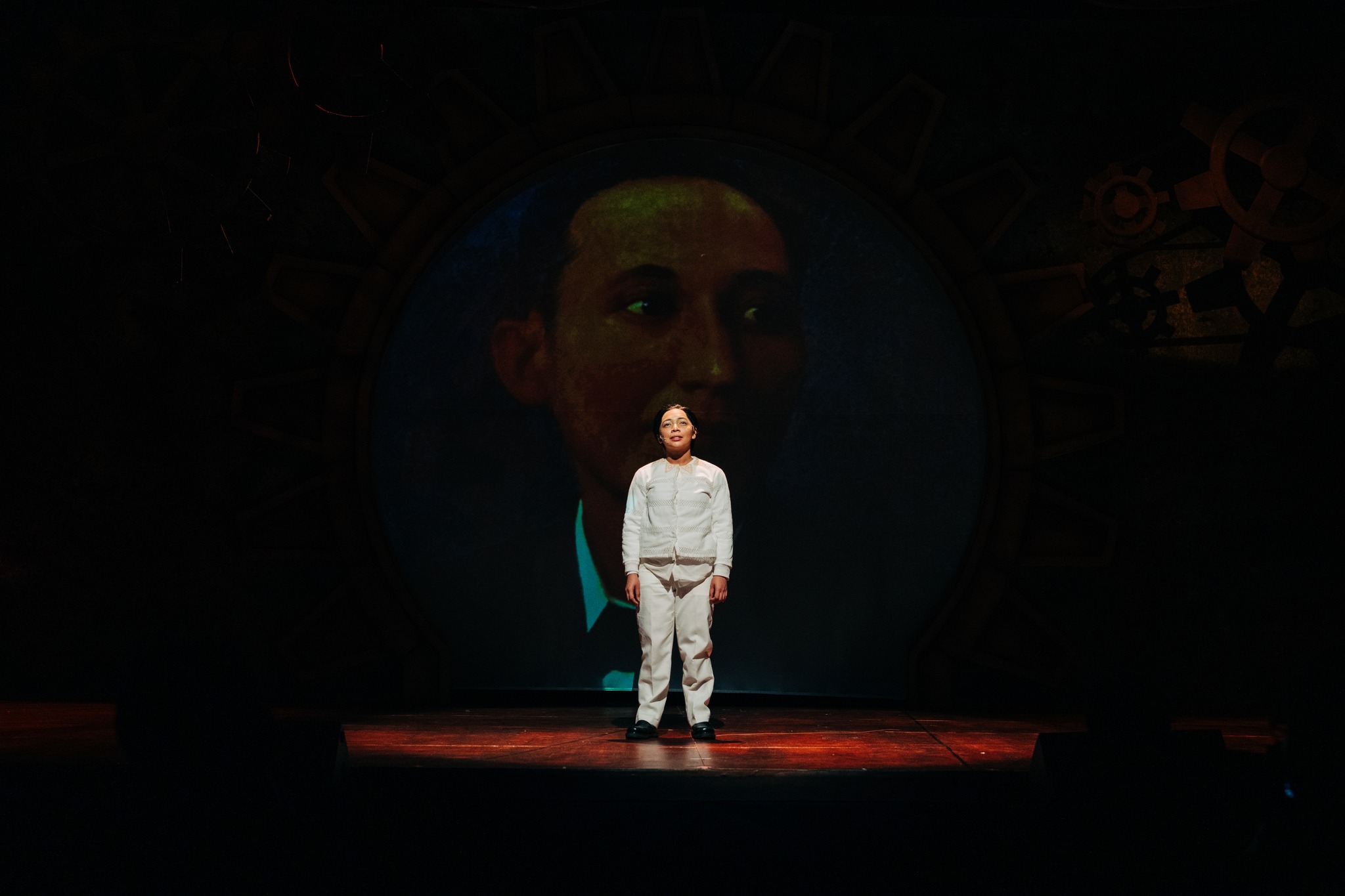
It is difficult to revisit “Mabining Mandirigma” without first recalling the world it premiered in.
When “Mabining Mandirigma” debuted in 2015 at the Cultural Center of the Philippines, the country stood on the cusp of political change. There were tensions, certainly — elections were approaching, and familiar patterns of politicking were already in motion — but the deep, often toxic divisions that now define the national discourse had yet to fully take hold.
Back then, what stood out most about the musical was its striking aesthetic choices: a bold steampunk design and the initially surprising casting of a female actor as Apolinario Mabini. But beyond these surface elements, what lingered was its blunt critique of American imperialism — clear, unapologetic, and central to its narrative.
More than a decade later, Tanghalang Pilipino revisits the work as part of its “Bayaniverse” season, following “Pingkian” and “Gregoria Lakambini.” Time, however, has reframed the musical in ways that feel almost startling.
The anti-colonial sentiment remains potent, but it is no longer the most arresting aspect of the piece.

What now emerges with greater urgency is its portrayal of internal division — embodied in the musical’s ilustrado figures, whose competing ambitions and ideological conflicts mirror the fractures of a nation still in the process of defining itself. What once felt like historical context now reads as something closer to diagnosis. The infighting, the self-interest, the failure to cohere around a shared national vision — these are no longer distant concerns, but immediate and familiar realities.
In this light, “Mabining Mandirigma” feels not just relevant, but prescient.
This restaging retains the original book, allowing its ideas to speak across time, but introduces subtle shifts in presentation. The addition of live piano accompaniment lends the score by Joed Balsamo a more intimate, almost parlor-like quality, reinforcing both the period setting and the production’s steampunk sensibility. The new venue, while different in scale, preserves the musical’s structural integrity, allowing its core to remain intact.
At the center of this staging is Shaira Opsimar as Mabini. Vocally, she is the strongest among the actresses who have taken on the part, bringing clarity and control to Balsamo’s demanding score. Dramatically, she offers a portrayal marked by both conviction and vulnerability, infusing Mabini with a youthful energy that underscores the character’s idealism.
It is a performance that confirms Opsimar’s steady ascent as one of the brightest leading ladies in Philippine theater today.

More importantly, it anchors a production that continues to evolve in meaning without losing its original intent. If anything, this staging affirms “Mabining Mandirigma’s” place in the contemporary canon — not merely as a historical musical, but as a work that continues to interrogate the nation’s past in order to better understand its present.
That it still resonates this strongly more than a decade later suggests that its questions remain unresolved. And perhaps, still urgently in need of asking.
“Mabining Mandirigma” runs until March 29, 2026 at the Tanghalang Ignacio Gimenez, CCP Black Box Theater, Pasay City.


Leave a Reply