The Sandbox Collective enters a new chapter with “Spring Awakening,” and if this production is any indication, the transition is in capable hands.
Now led by artistic director Sab Jose-Gregorio, succeeding Toff de Venecia, Sandbox continues its long-standing commitment to youth-centered narratives, particularly those that engage with mental health and the complexities of growing up. In choosing “Spring Awakening,” the company finds material that aligns seamlessly with that vision.
Based on Frank Wedekind’s controversial 1891 play, the musical — featuring music by Duncan Sheik and a book and lyrics by Steven Sater — follows a group of adolescents in repressive 19th-century Germany, struggling to understand their bodies, desires, and identities in a society that refuses them the facility to do so. The result is tragedy — one that continues to resonate across generations.
Director Andrei Pamintuan, who previously staged the musical for Ateneo Blue Repertory, approaches the material with notable restraint. Where past Sandbox productions have occasionally leaned toward over-contemporizing their works, Pamintuan resists the urge to impose unnecessary modern flourishes. Instead, he trusts the material, allowing its themes to speak for themselves.
The result is a production that feels both faithful and immediate.

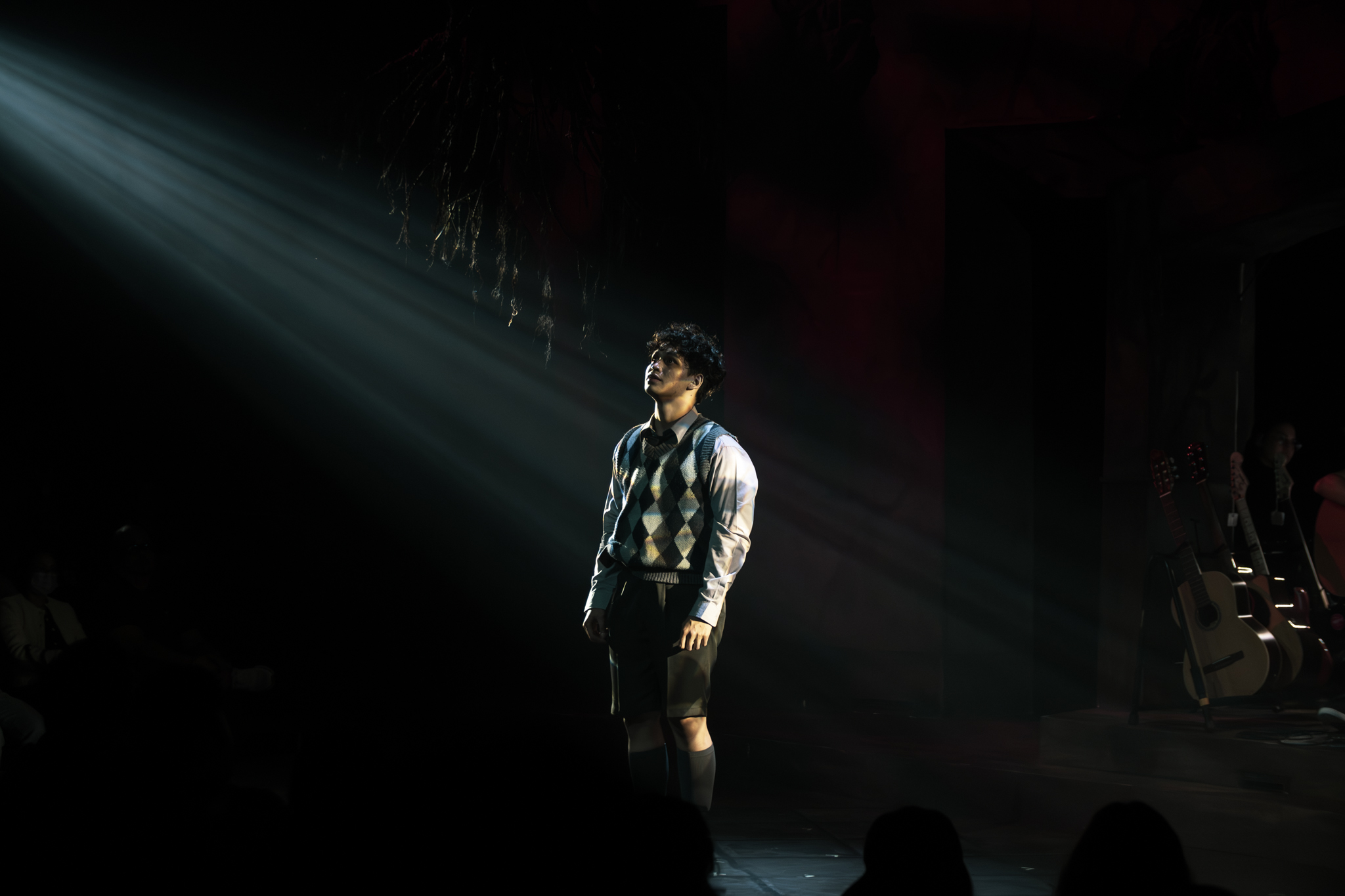
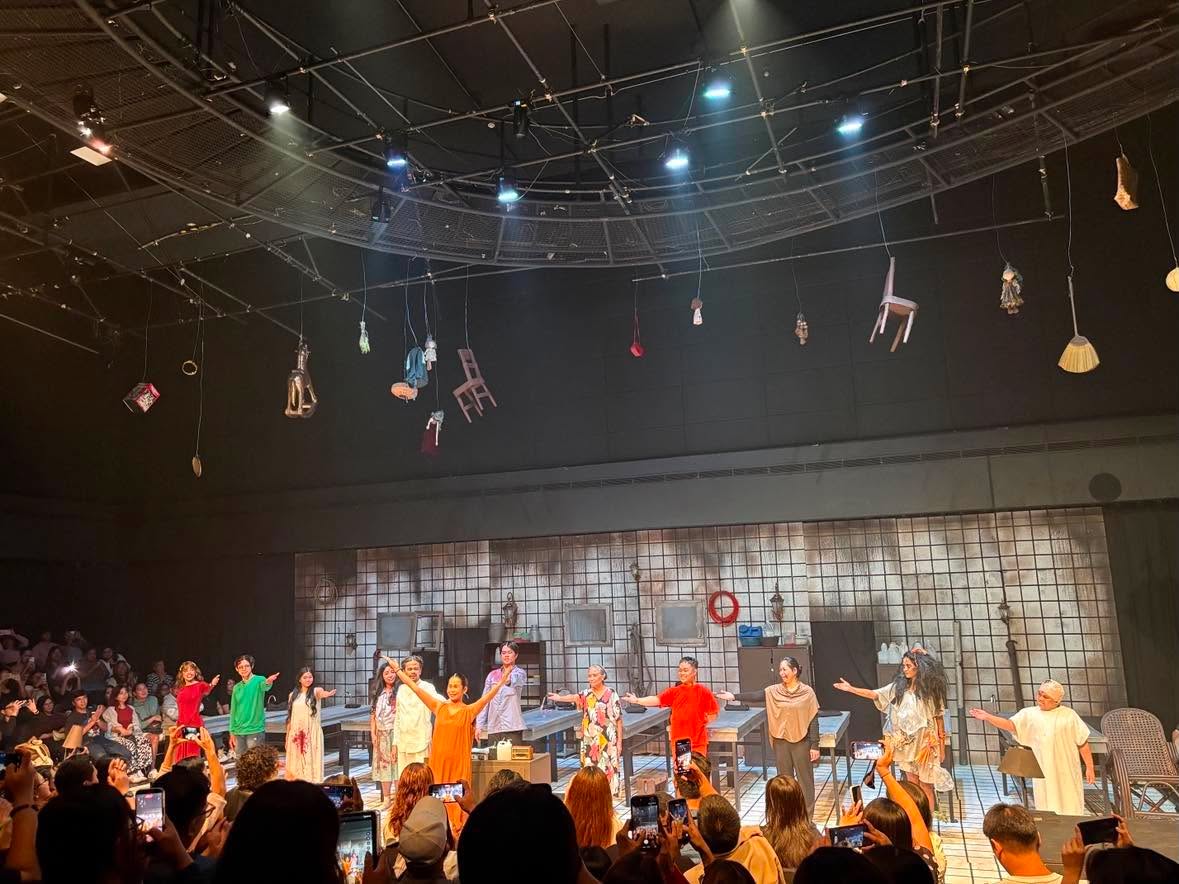
This iteration of “Spring Awakening” leans darker than most. The visual language is stark and unrelenting: a Brutalist set (by Wika Nadera) dominated by a suspended tree with exposed roots, surrounded by an almost colorless world. Lighting designer D. Cortezano bathes the stage in dim, shadowy tones, creating an atmosphere that feels perpetually nocturnal — at times even suffocating, like a dungeon closing in on its inhabitants. It is a fitting visual metaphor for the oppressive environment that traps these young characters, amplifying the emotional weight of their journeys.
Yet for all its bleakness, the production is, at its core, a celebration of youth — specifically, the young performers who bring this story to life.
At the center are Alex Diaz as Melchior, Sheena Belarmino as Wendla, and Omar Uddin as Moritz, a trio that anchors the production with remarkable emotional clarity.
Diaz’s Melchior is a refreshing departure from the usual portrayal of the character as self-assured and intellectually superior. Here, his intelligence feels largely academic — untested by experience, still searching for meaning. It is a nuanced take that underscores the character’s youth, making his actions less authoritative and more exploratory.

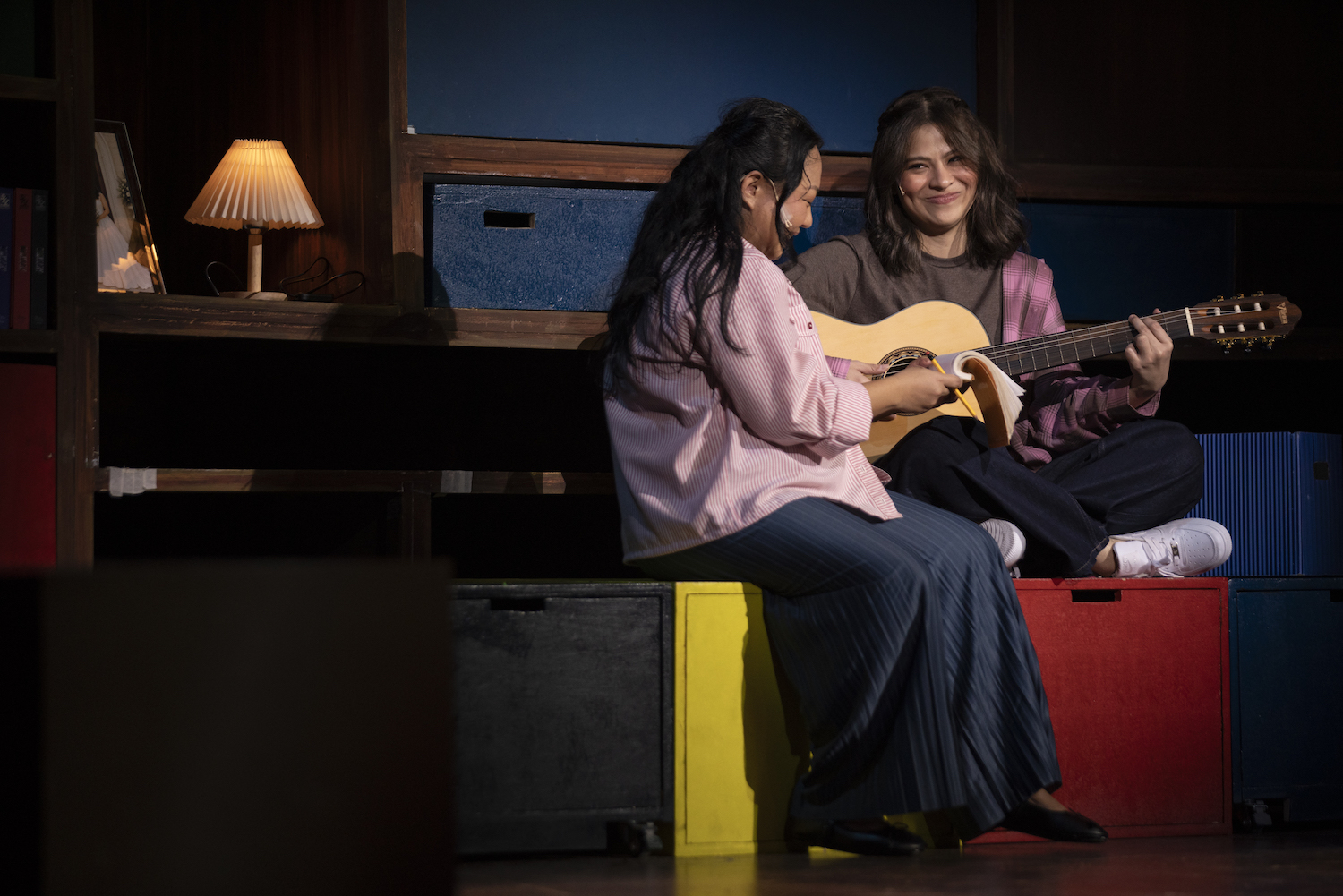
Opposite him, Belarmino’s Wendla captures the aching innocence of adolescence — the longing to understand feelings that are still unclear to her — and with a full, thrilling voice to boot. Their shared scenes are marked by a fragile curiosity, making their eventual trajectory all the more heartbreaking.
But it is Uddin’s Moritz that emerges as the production’s emotional core. In what may be one of the year’s most fully realized performances, he embodies the character’s anxiety, confusion, and quiet desperation with striking control. His descent into despair is rendered with painful honesty, culminating in a suicide sequence that is as devastating as it is empathetic. It is a portrayal that resonates deeply, particularly in an era more attuned to conversations around mental health.
The emotional aftermath is equally affecting. When Melchior delivers his eulogy, the moment lands with the same cathartic force as “I’ll Cover You (Reprise)” from “Rent” — a surge of grief that ripples through both the cast and the audience.
Supporting performances further enrich the production, with Angia Laurel standing out in “The Dark I Know Well. ” Her rich, velvelty alto voice lends the number a haunting depth, while her performance reveals an artist equally capable in both music and drama.
If there is a defining quality to this staging, it is its sincerity. There is little artifice here — only a clear-eyed commitment to the material and to the emotional truths it carries.
More than anything, “Spring Awakening” feels like a passing of the torch. In its young cast and director, one sees not just promise, but assurance — that Philippine theater, and not just Sandbox, remains in good hands.


Leave a Reply