
When “About Us But Not About Us” was first released at the height of the pandemic, it felt almost inevitable that it would find its way to the stage.
The film — written by Jun Robles Lana — was, in many ways, a model of lockdown cinema: two characters, one location, unfolding in real time. Set largely in a restaurant, it thrived on conversation, tension, and the slow unraveling of secrets. Even then, it carried a distinctly theatrical DNA, particularly in its inventive flashback device, where the two actors would momentarily transform into a third character, Marcus, with just a pair of glasses.
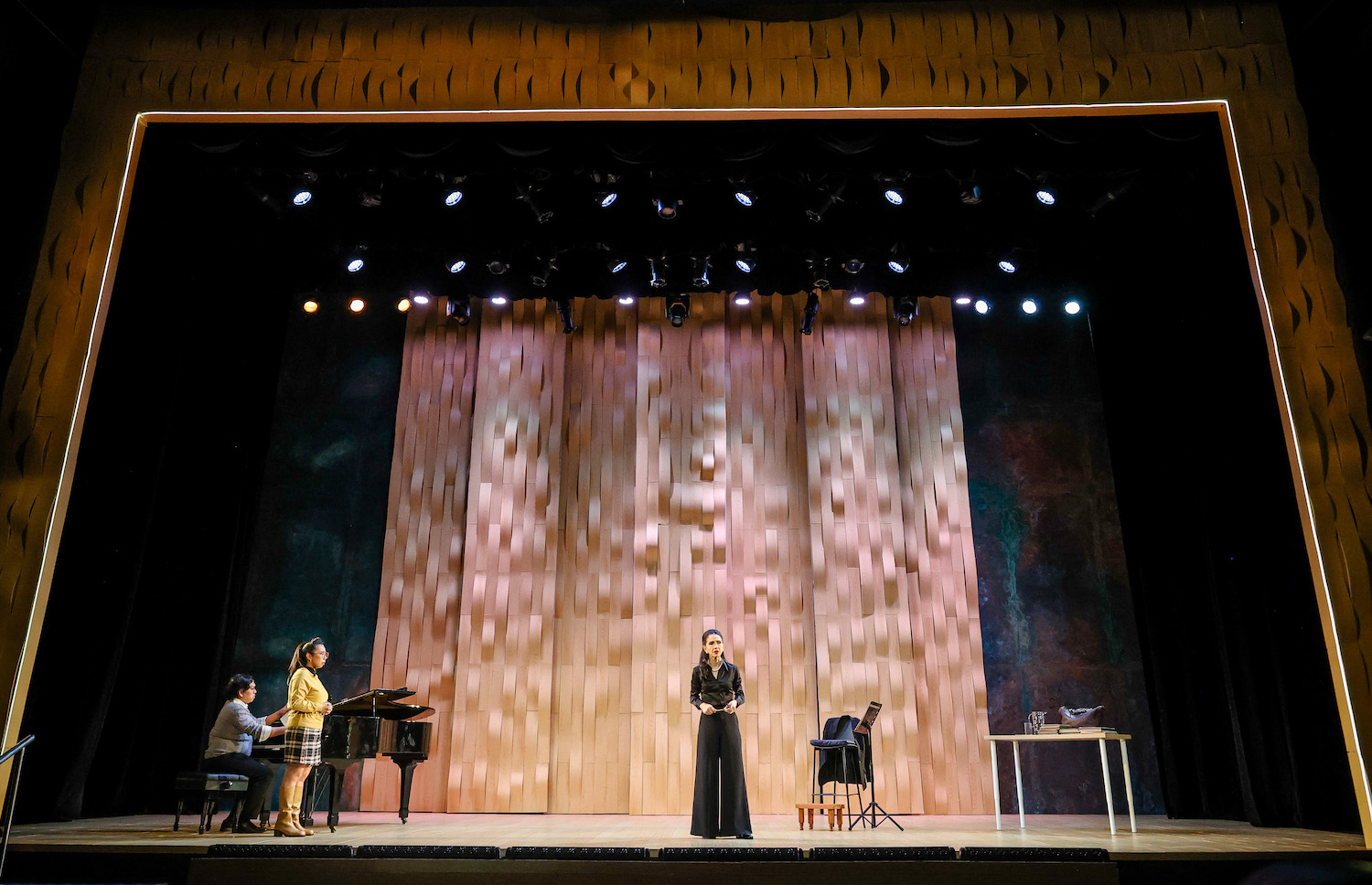
For its stage adaptation, The IdeaFirst Company makes a crucial — and ultimately rewarding — decision: Marcus is now a full-bodied presence, portrayed by a third actor. It is a change that reshapes the texture of the piece, grounding its theatricality while deepening its dramatic stakes.
Following last year’s “Anino sa Likod ng Buwan,” this marks the company’s second theatrical outing. One could argue, however, that “About Us But Not About Us” might have been the more natural introduction to its stage ambitions. This is, at its core, pure theater — lean, talk-driven, and powered by performance.
Running for one hour and 45 minutes without intermission, the play is an exercise in sustained tension. Directed by Tuxqs Rutaquio, it coils and recoils through half-truths, confessions, and revelations, its narrative slithering forward with a kind of deliberate unease. The script is, by design, “toxic” — its characters manipulative, contradictory, and often difficult to like. But that very toxicity is what makes the material so compelling. These are not figures built for easy empathy; they are messy, layered, and unsettlingly human.

What’s striking, too, is its language. Written entirely in English, the play never feels alien within its Filipino setting. The choice is justified — one character, Eric (Romnick Sarmenta), is a literature professor, while the other, Lancelot (Elijah Canlas), is his student — but more importantly, it reflects a growing comfort in staging intellectually driven dialogue. Like recent works such as “Dagitab” and “3 Upuan,” the play embraces conversations about literature and philosophy without apology, proving that such discourse can be dramatically engaging rather than pretentious.
The addition of Marcus proves to be the adaptation’s masterstroke. As portrayed by Andoy Ranay (with Epy Quizon alternating in other performances), the character emerges as a commanding, almost mythic presence — a writer of towering reputation, described in the text as the “Nick Joaquin of his generation.” Ranay leans fully into this stature, delivering a performance that is magnetic and authoritative. Each entrance shifts the energy of the room, often pulling focus even from the film’s original leads — a testament both to the strength of the character and the force of the performance.
Sarmenta, who was quietly devastating in the film, takes his more restrained approach to the stage. His Eric is internal, measured, and controlled — qualities that, while valid, occasionally render him less visible beside more overtly dynamic turns. It is not a weak performance, but one that risks being overshadowed by the material’s more explosive moments.
Canlas, on the other hand, once again proves why he remains one of the most compelling young actors of his generation. There is a particular confessional scene that lands with startling force — reminiscent of Edward Norton’s breakthrough turn in “Primal Fear” — where the actor peels back yet another layer of his character with unnerving precision. It is the kind of moment that makes you feel you are witnessing something rare in real time.

If “About Us But Not About Us” ultimately lingers, it is not because its characters are lovable — they are not — but because they are unforgettable. The play thrives on discomfort as it invites the audience not to sympathize, but to observe, question, and perhaps see reflections of themselves in its fractured relationships.
With a return run slated for October, the production offers another chance to experience a work that is as intellectually engaging as it is emotionally disquieting. It may not offer comfort — but it grips, provokes, and refuses to let go.



Leave a Reply