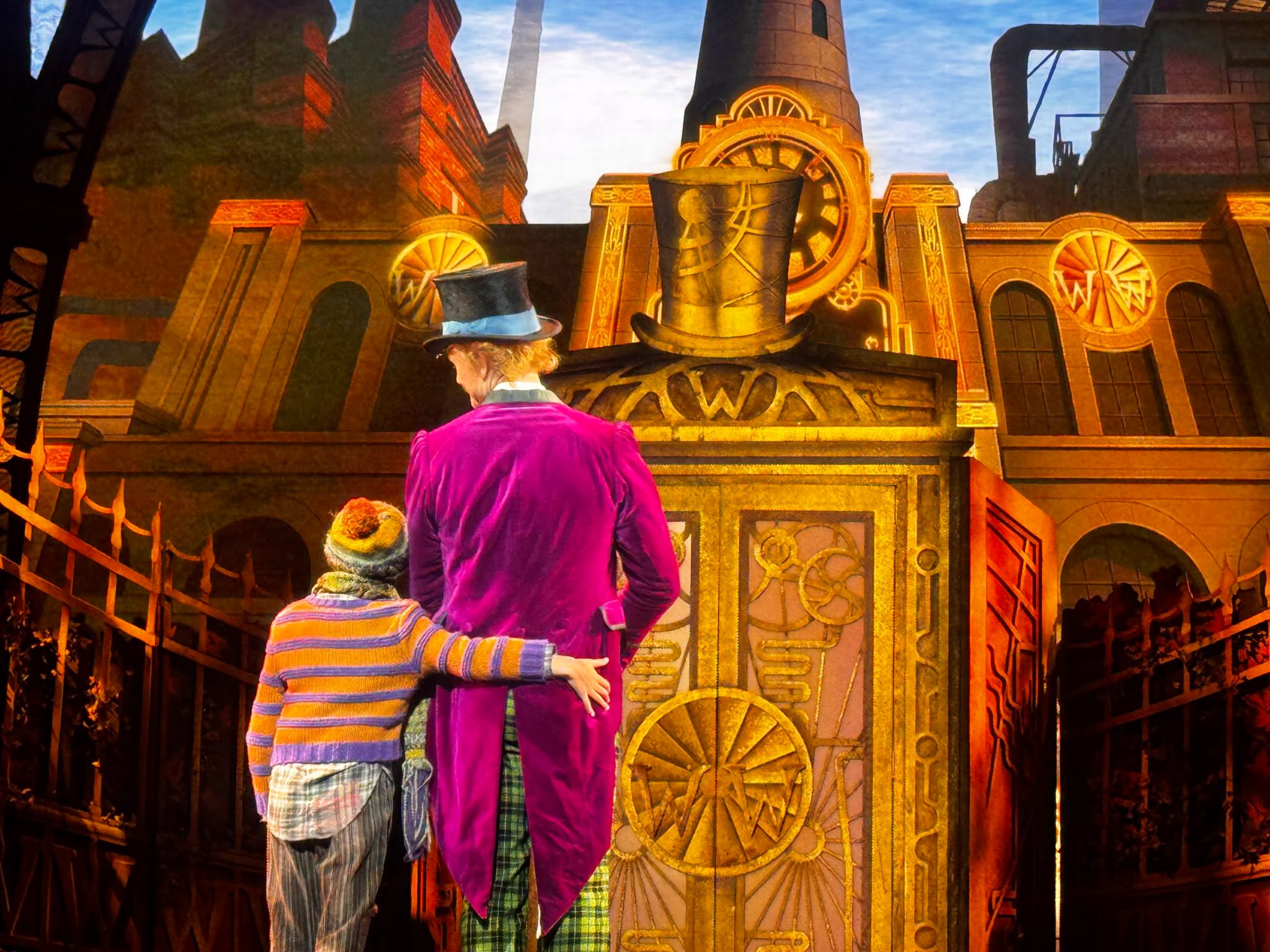
“Charlie and the Chocolate Factory” is a fascinating, if occasionally peculiar, theatrical confection. At its core, it remains a piece of vibrant family entertainment based on Roald Dahl’s classic children’s tale — a perfect, eye-popping gateway to introduce kids to the magic of live theater.
Yet, for those of us who grew up with the iconic 1971 film starring Gene Wilder, this stage adaptation — which smartly retains the classic movie tunes for its latest iteration — serves a dual purpose. It is a playground for children, yes, but also a potent nostalgia trip for adults who still find themselves humming along to “Pure Imagination” and “The Candy Man” decades later.
The story is painted in broad, black-and-white strokes of good versus evil. We follow Charlie Bucket, a kind, impoverished boy who idolizes the eccentric chocolatier Willy Wonka. When Wonka announces a promotion offering five Golden Tickets to tour his legendary factory, Charlie beats the odds to win a spot.

Michael Dalke is Willy Wonka. GMG Productions/Facebook
Watching the story unfold as an adult highlights just how remarkably dark Dahl’s universe actually is. The second act essentially functions as a sequence of cartoonish yet gruesome eliminations. Children are sucked up by pipes, attacked by giant squirrels, or inflated until they burst.
Interestingly, though I watched these exact events in the 1971 film as a child, I couldn’t recall them in such graphic detail. It suggests that these grim fates are not nearly as traumatizing to young minds as adults might fear. Children possess an innate ability to process these lessons in stark, moralistic terms — bad kids get punished, good kids persevere. Judging by the sea of delighted young faces and the glowing parent reviews on social media, the primary market is having an absolute blast, nightmares happily averted.
From a critical standpoint, the updates made to modernize the golden ticket winners are highly effective. While Augustus Gloop and Veruca Salt remain archetypes of gluttony and spoiled privilege, Violet Beauregarde has been reimagined as a fame-obsessed, hyper-competitive tween, and Mike Teevee is no longer just a couch potato but a tech-addicted cyberbully. These changes make the cautionary tales feel more relatable for a modern audience.
The most striking aspect of this touring production is its reliance on modern technology. While the creative team has studied and employed classic physical magic tricks — making objects float or appear from thin air — the heavy lifting is done via video mapping and digital projections.

Theater purists might decry the lack of heavy set pieces. Admittedly, the show is highly dependent on screens. However, the result is undeniably colorful, eye-popping, and dynamic — and easier to tour. By throwing the projections beyond the stage proscenium and onto the walls of the theater itself, the production creates an immersive, wrap-around atmosphere. When physical bubbles descend upon the audience, the line between the performer and spectator blurs.
Some might argue this digital approach requires less imagination from the viewer, but given the technology available today, utilizing it to craft such a transportive experience is a justified win.
Importantly, the aesthetic avoids hyper-realism, as the costuming and digital backdrops retain a charming, storybook quality that honors the material’s literary roots.
And where traditional stagecraft is used, it triumphs. The Oompa Loompas — brought to life through a brilliant combination of puppetry, illusion, and inventive costuming — are the undisputed, undeniable scene-stealers of the night. Watching them navigate the stage is a masterclass in theatrical creativity that will leave both adults and children completely entertained.

The cast enthusiastically embraces the show’s heightened, storybook tone. Oliver Wong is an appealing Charlie, bringing crystal-clear vocals and an earnest sincerity that anchors the production. Michael Dalke’s Willy Wonka strikes the right balance between whimsical eccentricity and quiet paternal warmth without slipping into imitations of Gene Wilder or Johnny Depp. Rounding out the cast is lone Filipino cast member Karylle, who makes the most of her featured moment with a tender rendition of “If Your Father Were Here.”
While the musical’s first act feels a bit tedious as it slowly introduces each of the characters, the momentum recovers once we cross the threshold into the factory. It is worth noting that the newer musical numbers, while serviceable, simply cannot compete with the timeless, nostalgic hooks of the original film songs.
Even so, “Charlie and the Chocolate Factory” succeeds on the strength of its visual enthusiasm, its clever updates, and its sheer theatrical heart. If you are looking for a spectacular, sensory-rich production to introduce your children to the wonders of the theater, this show is a golden ticket.

“Charlie and the Chocolate Factory: A New Musical” runs at the Theater in Solaire from July 8 to 26, 2026.


Leave a Reply