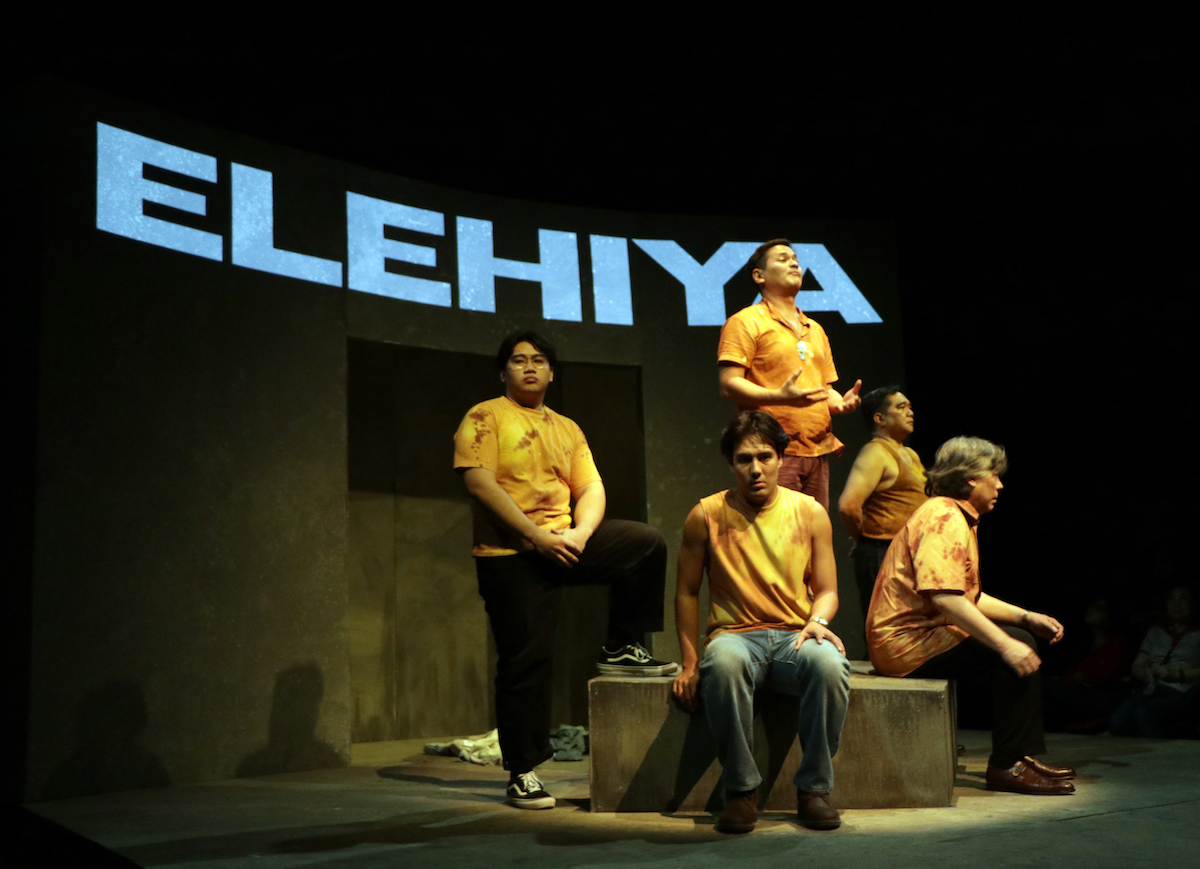
Virgin Labfest XXI opened with a bang. Its first set of one-act plays delivered exactly the kind of provocative, politically charged theater audiences have come to expect from the Cultural Center of the Philippines’ annual festival of new works. Set A featured three hard-hitting political dramas that tackled difficult subjects with urgency and conviction, setting expectations high for the rest of the season.
As the festival progressed through Sets B, C and D, however, those expectations became increasingly difficult to sustain.
Following last year’s milestone 20th edition — and perhaps even since the festival’s return to live performances after the pandemic in 2023 — Virgin Labfest XXI ultimately felt like one of the weaker lineups in recent memory. While VLF XX lacked a singular breakout masterpiece, it was still generally marked by a consistently compelling slate of works. This year, several emerged as outright disappointments.
Yet the season also produced one of the most emotionally devastating and artistically accomplished plays the festival has seen in years.
But VLF’s significance today may no longer be confined to the plays themselves. After more than two decades, the festival has firmly established itself as one of Philippine theater’s most important institutions.
What was once primarily a gathering place for Metro Manila’s theater community has evolved into a cultural event that draws artists from across disciplines. Different theater companies, creative cliques and generations continue to converge at VLF, reinforcing its role as a central meeting ground for the industry.
This year, however, another trend became impossible to ignore: the festival’s growing appeal to mainstream film and television talent.

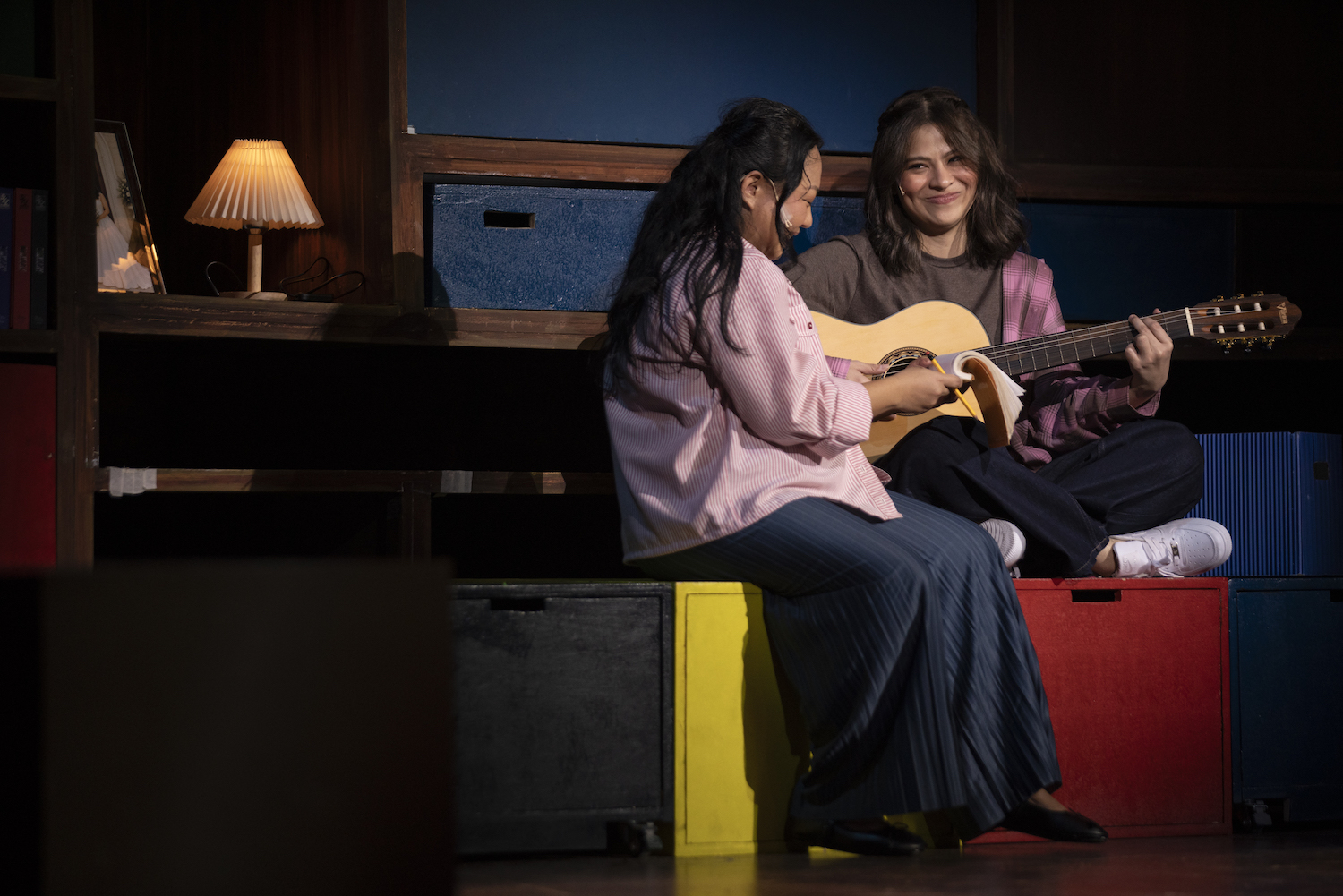
Last year, much of the attention centered on actress Angelica Panganiban’s VLF debut. This year, her close friend Glaiza de Castro followed suit. The lineup also features Elijah Canlas in his first VLF appearance, alongside Meryll Soriano in “Footprint,” Angel Aquino and Jackie Lou Blanco in “Lualhati,” and Christian Bables in “Taksyapo” — performers whose careers have largely been associated with film and television but who brought considerable star power to the festival.
The attraction extends beyond actors. Comedian John Lapus finally makes his VLF debut as a playwright with “Taksyapo” after several previous attempts. Acclaimed filmmaker JP Habac, best known for “I’m Drunk, I Love You,” stepped into the festival as a director with “She’s Electric” starring Glaiza de Castro. Actor Jerom Canlas expanded his theater repertoire by debuting as a playwright with “Footprint,” which stars his brother Elijah.
Family connections also emerged as a recurring theme. Veteran filmmaker and occasional actor Carlitos Siguion-Reyna shared the stage with his son Rafa for the first time in “Elehiya,” while Angel Aquino appeared alongside her daughter Iana Bernardez in “Lualhati.”

Taken together, these developments reflect how VLF has become an increasingly attractive gateway into theater for mainstream artists. The festival’s one-act format, relatively brief rehearsal period and limited performance schedule offer an accessible entry point for performers interested in exploring the stage without the demands of a full-length commercial production.
That growing visibility is undoubtedly good for Philippine theater. The challenge moving forward is ensuring that the increasing attention is matched by equally rigorous curation. If Virgin Labfest is to continue serving as the country’s premier incubator for new dramatic writing, the strength of the plays themselves must remain the festival’s primary focus.
Among this year’s offerings, here are my four top picks, in order:
1. ‘Elehiya’ by Dustin Celestino

Some plays move you. “Elehiya” broke me.
Anyone who has followed my VLF coverage over the years already knows that I’m a Dustin Celestino fanboy. Somehow his plays almost always end up in my personal top four. And this one might be his best yet.
“Elehiya” is about forgiveness between fathers and sons, the things Filipino men inherit from previous generations and those we’re trying to leave behind.
I don’t think I’ve ever cried this hard during a play. By the end of Yan Yuzon’s final monologue, I was basically shattered. The lights came down and I just sat there trying to recover.
Looking back at Celestino’s body of work, you can see recurring questions about masculinity and changing social expectations. “Elehiya” feels like the culmination of those concerns. Maybe even an elegy for a certain version of Filipino manhood.
Director Ron Capinding deserves enormous credit for shaping the material into a cohesive ensemble piece. The production is minimalist but emotionally expansive. Carlitos and Rafa Siguion-Reyna playing father and son adds an extra layer of poignancy that can’t be manufactured.
And then there’s Yuzon. The sudden attention he’s getting from audiences is completely deserved. What surprises me is not that people are praising him now but that they weren’t paying attention earlier. He’s been doing excellent work for years. This performance feels like a breakthrough.
2. ‘Human Rights Story of the Year’ by Elijah Felice Rosales

This is the most “me” play in the lineup.
People see the title and immediately assume it’s another tokhang drama. It isn’t — at least not primarily.
For me, this is a play about journalism. It’s about credit, authorship, integrity, even professional jealousy. More importantly, it’s about selective truth, the stories we tell ourselves about our own work.
The premise is deceptively simple. An award-winning journalist prepares to leave for an overseas fellowship after being recognized for her reporting on drug war widows. During her despedida, she reconnects with a former colleague who has since joined the government. Then all hell breaks loose.
I’ve never personally encountered this exact situation. But every journalist who’s spent enough time in a newsroom knows these people. That’s what makes the play so engrossing for me.
Rosales explores a moral dilemma that feels incredibly specific to journalism while still making it accessible to general audiences. There are no heroes nor villains — only competing versions of truth. As someone who spent years in newsrooms, I found it impossible to look away.
Nelsito Gomez’s minimalist direction lets the writing breathe, while Justine Peña and CJ Navato deliver two of the strongest performances of the festival.
3. ‘Balos’ by Nik Azcuna

Give me a medical drama and there’s a good chance I’ll love it. I’ve had medical plays in my VLF favorites before, including Joshua Lim So’s “Pagkapit sa Hangin” a few years ago. Now we can add “Balos” to the list.
Set during the Marawi siege, the play follows healthcare workers confronted with the arrival of a suspected terrorist who requires treatment. What begins as a medical ethics conflict quickly expands into something larger. Religion, prejudice, politics, fear, hatred — all of these collide in this terse episode.
I particularly appreciated how the play refuses to simplify the issues it raises. Nobody gets an easy position or a convenient moral victory.
Vincent Pajara gives a wonderfully compassionate performance at the center of the piece, while director Cholo Ledesma continues an impressive run after directing my favorite play from last year’s festival, “Unang Araw.” He’s becoming one of the young directors whose work I look forward to seeing.
4. ‘Lualhati’ by Gab Mactal

The biggest writing discovery of the year is Gab Mactal.
Many theater fans already know this young writer as a member of the translating team on Tanghalang Ateneo’s acclaimed “Emilia,” but “Lualhati” announces this talented Atenean as a playwright worth watching.
The play centers on a nun and a teacher who first met as postulants before reconnecting years later.
What impressed me most was how naturally Mactal navigates questions of faith and sexuality. Those conversations can sometimes feel defensive, preachy or overly intellectual. “Lualhati” avoids all of those traps. Instead, it feels honest and human.
Angel Aquino gives the production its emotional center. On the performance I attended, Jackie Lou Blanco’s role was played by alternate Banaue Miclat. I still would’ve loved to see Aquino and Blanco together. Two veteran screen actresses sharing the stage creates a different kind of energy.
But that’s less a criticism than simple curiosity. Because even with the alternate cast, “Lualhati” remained deeply affecting.
For all its discussions about religion, philosophy and queerness, the play ultimately transcends labels to become a moving reflection on love, faith and the choices that shape a life.
Honorable mentions: ‘Password123, Pilpinas321’, ‘She’s Electric’
OTHER CITATIONS
Best script: ‘Elehiya’
Honorable mentions: ‘Lualhati’, ‘Human Rights Story of the Year’, ‘She’s Electric’
Best ensemble: ‘Elehiya’
Honorable mentions: ‘Password123, Pilpinas321’, ‘Balos’, ‘She’s Electric’

Best Lead Performance: Yan Yuzon (‘Elehiya’)
Honorable mentions: Elijah Canlas (‘Footprint’), CJ Navato and Justine Pena (‘Human Rights Story of the Year’), Vincent Pajara (‘Balos’), Angel Aquino (‘Lualhati’), Donna Cariaga (‘Patayin ang mga Surot’)
Best Featured Performance: Dennis Marasigan (‘Elehiya’)
Honorable mentions: Rafa Siguion Reyna (‘Elehiya’), Omar Uddin (‘Footprint’), Gie Onida (‘Password123, Pilpinas321’), Iana Bernardez and Sarah Monay (‘Lualhati’)
Direction: Ron Capinding (‘Elehiya’)
Honorable mentions: Nelsito Gomez (‘Human Rights Story of the Year’), Norbs Portales (‘Password123, Pilpinas321’), Cholo Ledesma (‘Balos’)

‘Haram’ by Alab Usman. Orly Daquipil/CCP
Set Design: Mark Daniel Dalacat (‘Haram’)
Honorable mentions: Erold Enriquez (‘Balos’), Mark Lorenz (‘She’s Electric’)
Lighting Design: Third Salamat (‘Haram’)
Honorable mentions: Roman Cruz and Martin del Rosario (‘Elehiya’), Loren Rivera and Third Salamat (‘Balos’)
Projection Design: Tofie Falcon (‘Password123, Pilipinas 321’)
Honorable mentions: Tofie Falcon (‘Haram’), Danica Layne Reyes (‘Balos’)
Sound Design: Matthew Chang (‘Password123, Pilipinas 321’)
Honorable mentions: Arvy Dimaculangan (‘Haram’ and ‘Balos’)
Costume Design: Monica Serial and Sam Quizon (‘Elehiya’)

Leave a Reply