
Just last week, during a Senate hearing on labor and employment, Senator Raffy Tulfo reiterated a sobering truth: contractualization or end-of-contract (endo) schemes remain widespread and continue to be a persistent crisis for Filipino workers.
That reality hangs over this stage adaptation of the Cinemalaya classic “Endo,” a film that once captured the issue with quiet power and devastating specificity.
Rather than translating the 2007 movie directly to the stage, playwright Liza Magtoto and director Melvin Lee chose to reset “Endo” firmly in the present, reframing it within the world of the gig economy. Here, workers hustle through online platforms as delivery riders, sellers, fix-it helpers, and digital freelancers. On paper, this decision feels timely, “sexy,” and undeniably relevant — particularly for younger theatergoers who may be more familiar with apps than retail and manufacturing contracts.
The challenge is that by shifting the focus to the gig economy, the adaptation muddles the original political issue. It risks suggesting that endo is no longer central and urgent, when in reality, it very much is. While both contractualization and gig work expose laborers to exploitation, insecurity, and poverty, they are not the same system and should not be treated interchangeably.
As my colleague Vincen Gregory Yu pointed out, endo is defined by its cruelty and repetition: five months of work, termination just before regularization, then starting again from zero. Workers are trapped with long hours, fixed schedules, and no flexibility. Gig workers, for all the precarity they endure, occupy a different structure altogether. They can log off. They can juggle multiple jobs. Some — through sheer luck, virality, or entrepreneurial savvy — might even escape the grind entirely. That possibility, however slim, simply does not exist within the endo system.

If this production truly wanted to interrogate the gig economy — how it works, how Filipinos survive it, how it reshapes labor — it would have been better served by an original narrative than by a repurposed IP rooted in a very specific labor reality.
Part of what made the original “Endo” film so affecting was its restraint. It never preached; instead, it trusted small moments to speak volumes — workers waiting for jeepneys, eating at a carinderia, resting outside the mall after a shift, sharing worn-out earphones connected to a battered Discman. These quiet observational details gave the film its authenticity and emotional weight.
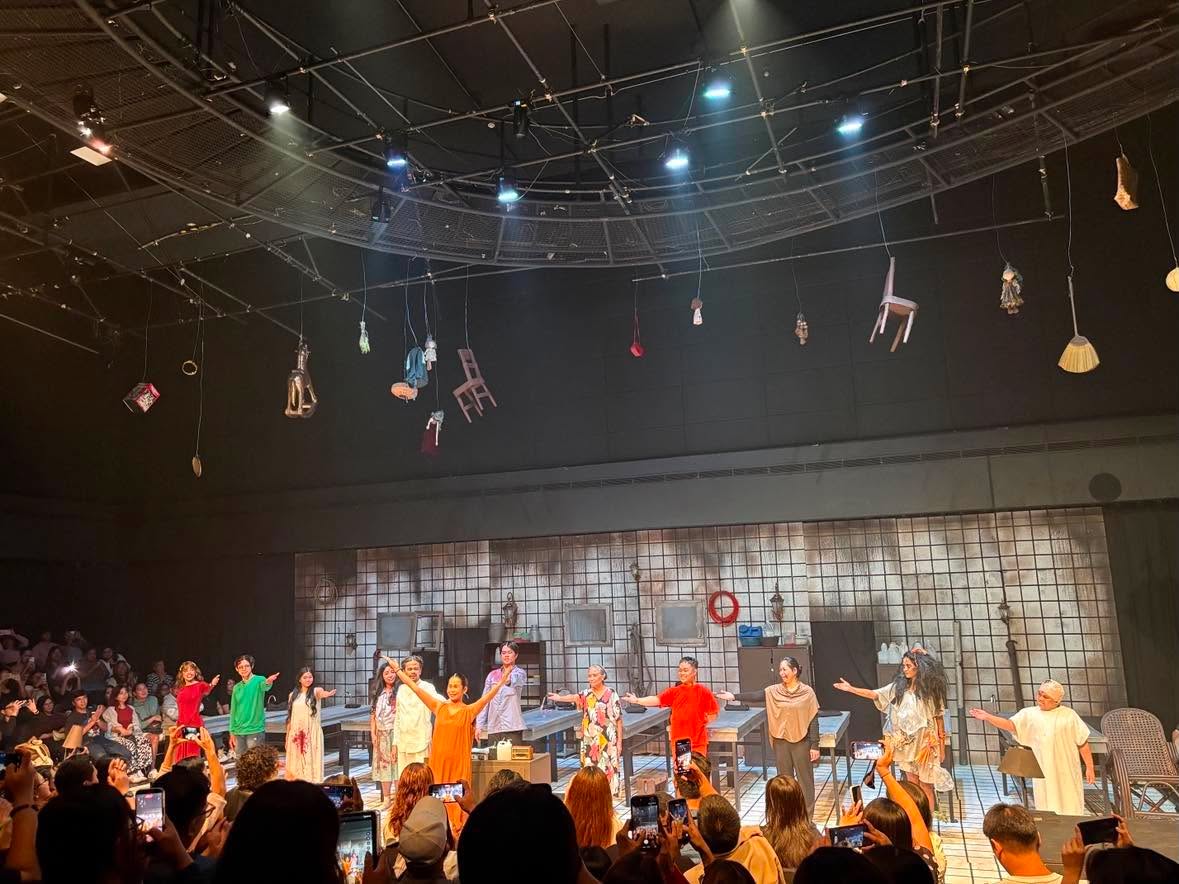
In contrast, the stage version embraces overt metaphor almost to excess. D Cortezano’s deliberately wobbly set visually literalizes instability, while dangling ropes represent unreachable opportunities. These are striking ideas, but they’re reinforced — and often overemphasized — by near-constant movement. Christine Crame’s choreography is used not only to evoke the city’s relentless grind or floods and traffic, but also in moments where stillness would have been far more powerful. A restaurant scene featured actors hoisting oversized menu cards. Social media reels are performed live by the ensemble — talking dogs, viral trends danced onstage. What begins as playful becomes stifling.

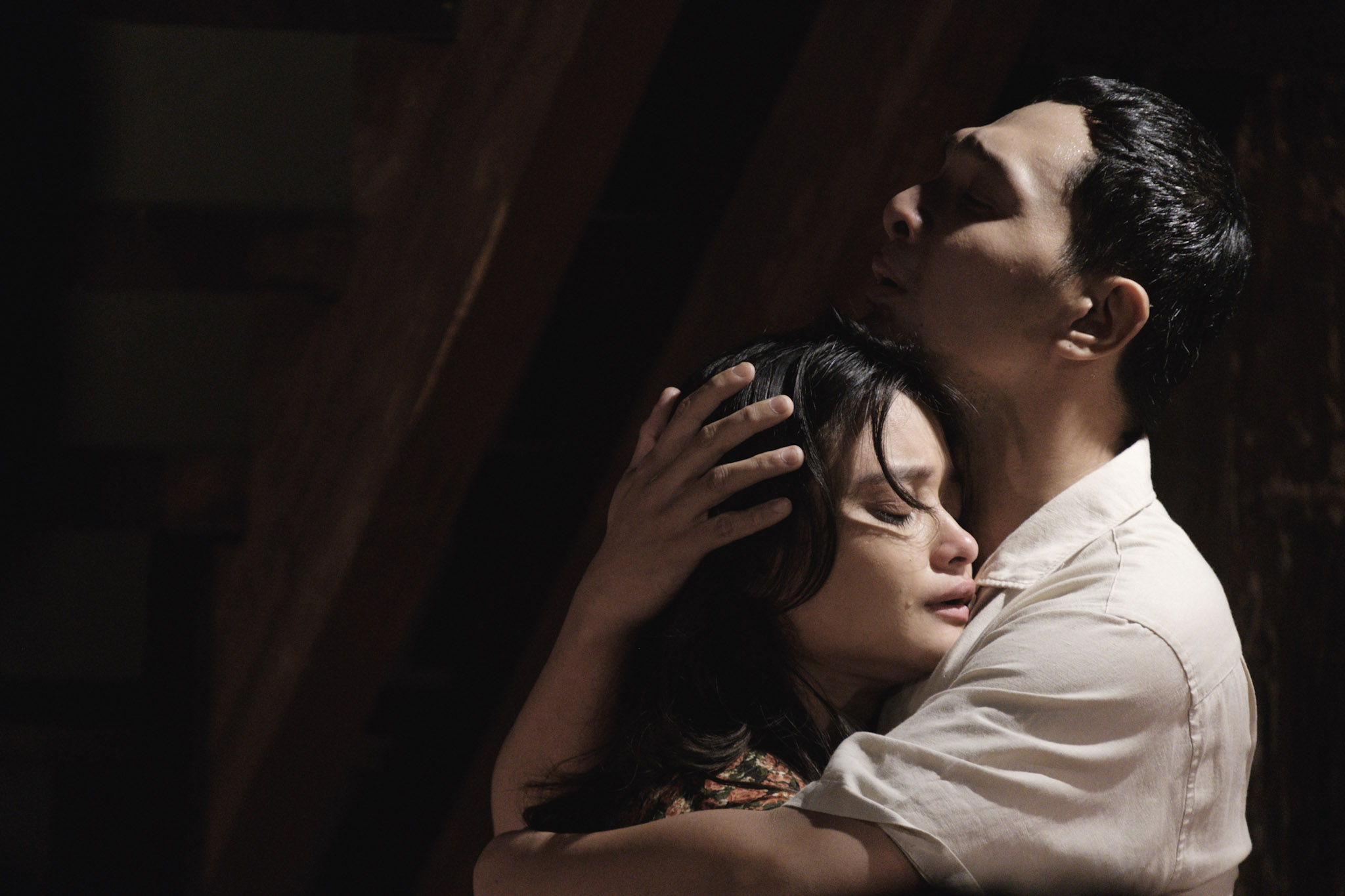
This is unfortunate, because “Endo” is most moving when it strips everything away — when Leo and Tanya simply talk about their lives, fears, and modest dreams. That’s where its emotional center lies. Those quiet exchanges are what make you root for these characters, because their aspirations are deeply, painfully Filipino.
At its core, the film is a love story — one that reveals how the impermanence of employment seeps into personal relationships, rendering them just as fragile, temporary and even short-lived.
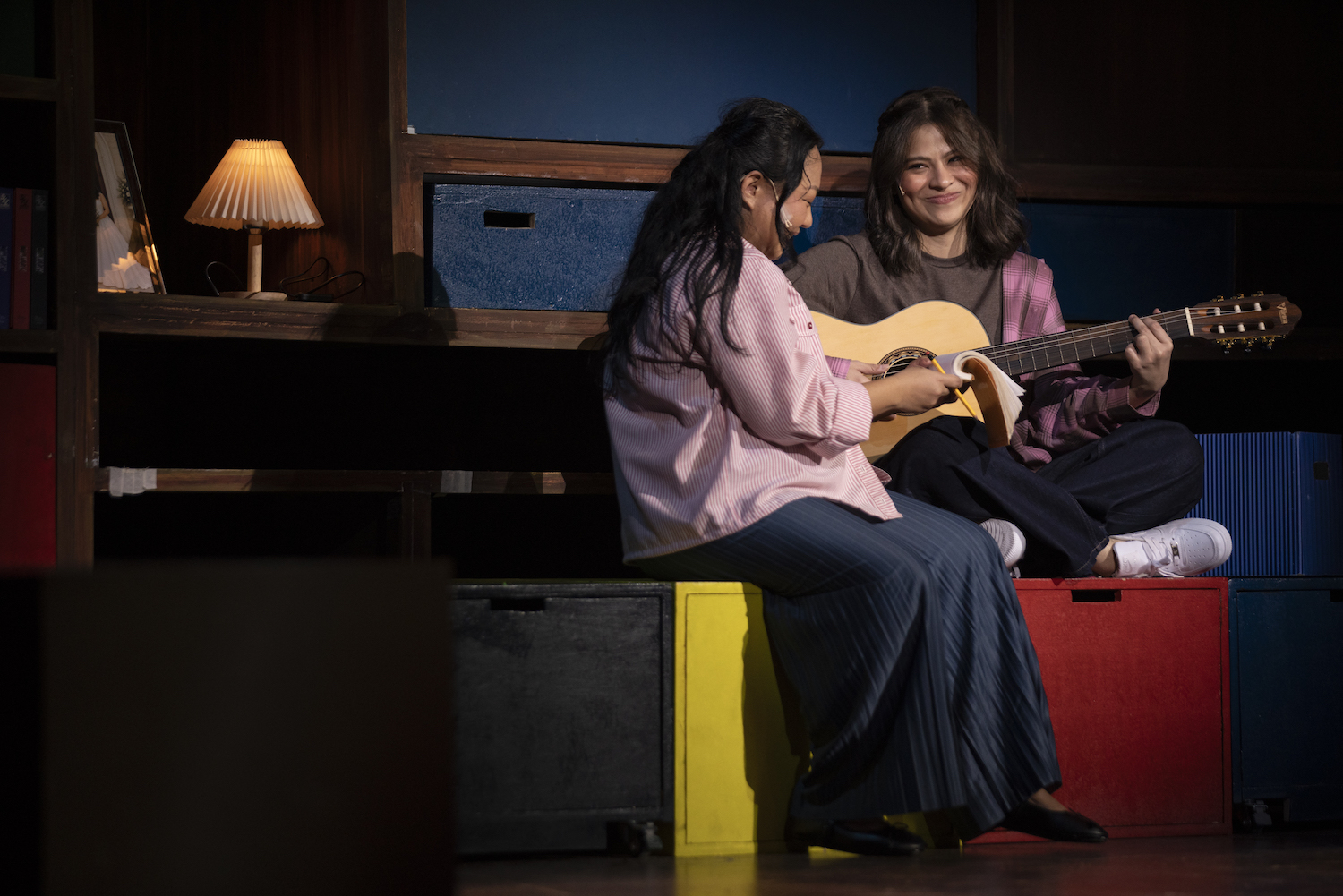
The performances themselves are not the problem. Royce Cabrera and Jasmine Curtis-Smith, both of whom delivered breakthrough theater performances last year, bring credibility and emotional depth to the roles. Curtis-Smith’s Tanya radiates optimism and charm, while Cabrera’s Leo carries the exhaustion of someone constantly on the verge of breaking.

That said, their alternates, Esteban Mara and Rissey Reyes-Robinson, arguably serve the material better. Not because they are stronger performers, but because they arrive without the distraction of celebrity. Reyes-Robinson in particular adds a sharper edge to Tanya, portraying her as more driven and ambitious, which makes her final decision far more coherent.
Ultimately, however, the adaptation strays so far from the film — not just in theme, but in character arcs (Tanya, Leo’s ex Candy, even Leo’s family) — that it raises the persistent question: why adapt “Endo” at all?
For viewers unfamiliar with the film, the play will likely still land. Its message is urgent, necessary, and — at its core — righteously angry. It captures the exhaustion of the Filipino working class, the staggering depth of national inequality, and the futility of maintaining hope when the system itself is designed to fail you. And with strong performances and star turns, the experience is far from wasted.
But if you love the film — if you cherish its realism and quiet rage — it might be best to leave “Endo” where it began, and hold on to that memory instead.
“Endo” runs until May 10 at the PETA Theater Center, Quezon City.

Leave a Reply