There’s something undeniably exciting about the current theater boom in Manila. It isn’t just defined by the established companies or the heavyweights of university theater but a full-spectrum explosion.
We are seeing a surge of independent groups popping up in fringe venues and off-the-beaten-track stages, drawing decent crowds that prove this renaissance isn’t just for a niche elite.
‘Saglit Lang’
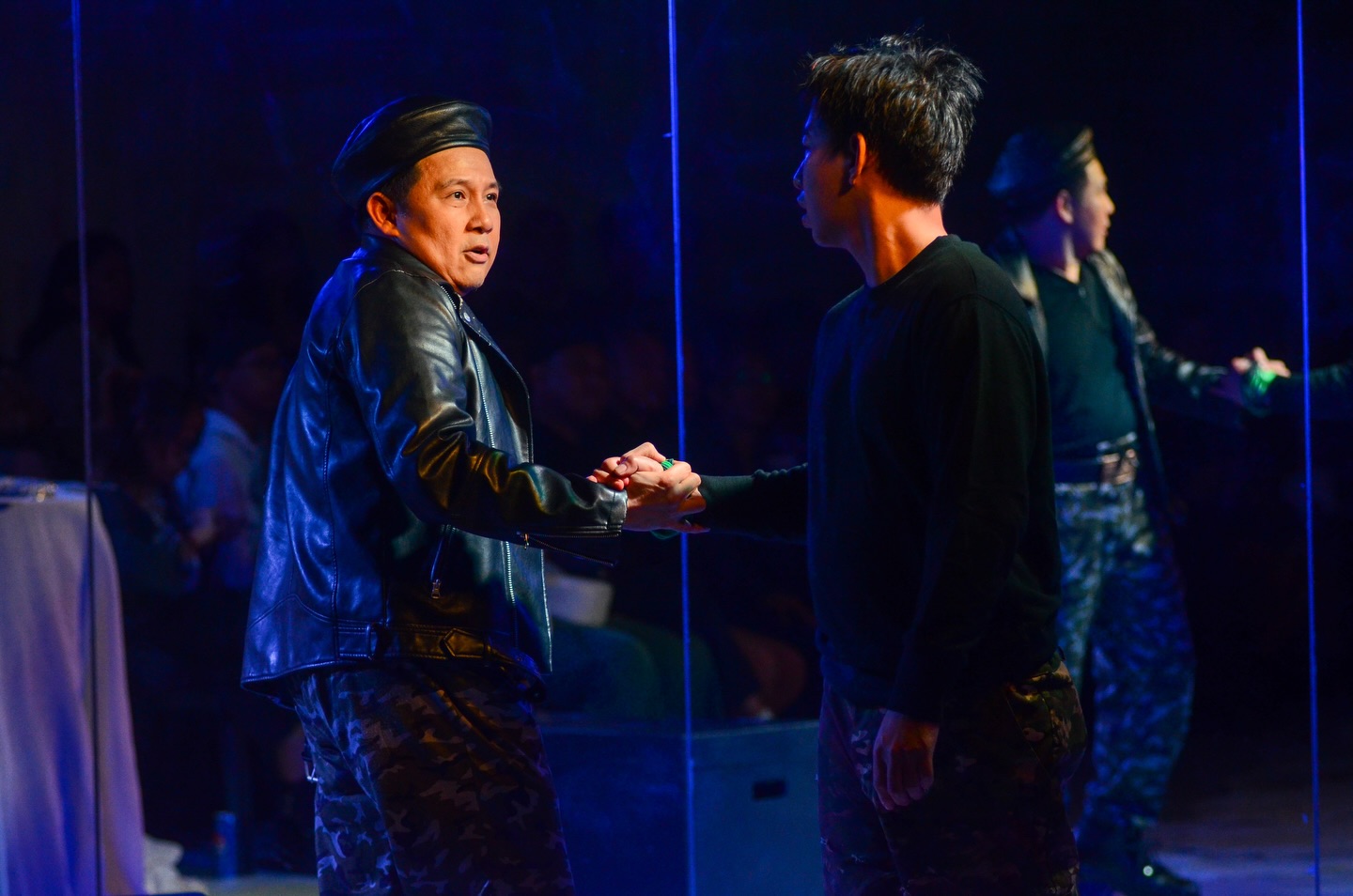
One of the newer voices in this landscape is Infinite Cantina, which is currently mounting a short, two-weekend run of “Saglit Lang” at Mirror Studio. Written by BJ Crisostomo, the play is a two-hander that doubles as both a love letter to theater and a tribute to the mentors who shape it.
While not explicitly biographical, “Saglit Lang” feels like part of a growing body of work responding to the legacy of the late Ricardo Abad. Like Guelan Luarca’s “3 Upuan” and the emergence of Teatro Meron, it carries the imprint of a teacher whose influence continues to ripple through generations of theater students. Crisostomo and co-actor Ron Capinding — both deeply rooted in the Ateneo tradition — make that lineage palpable.

This is a play about how a mentor’s voice is carried and ultimately passed on.
Make no mistake: “Saglit Lang,” directed by Anton Juan, is not an easy watch. It isn’t designed for the casual theatergoer looking for light entertainment. This is a play that speaks most clearly to those who have spent time in rehearsal rooms, who have wrestled with text, and who understand the peculiar devotion theater demands.
The structure is deceptively simple. Two characters, Bata and Maestro, meet in a theater. What begins as an encounter unfolds into something closer to a lecture-performance on theater as truth. The text moves through a collage of canonical works, including “A Midsummer Night’s Dream,” “Waiting for Godot,” and “Antigone.” But the play isn’t interested in merely retelling these stories; instead, it channels their emotional and historical weight.
At the center of it all is Capinding, whose portrayal of the Maestro leans into a more traditional, almost declamatory style. It can feel broad at times, but it is anchored by undeniable passion. Alongside Crisostomo, there is a shared reverence for the text itself that drives the performance forward.

As the play moves toward its conclusion, it shifts into a more familiar emotional territory. The student-teacher dynamic takes an expected turn, with the Maestro approaching his end. It’s difficult not to read this as a kind of proxy farewell — a passing of the torch that echoes beyond the stage. The final moments flirt with melodrama, but they also provide a release from the intellectual rigor of the earlier scenes.
“Saglit Lang” ultimately stands as an antithesis of commercial theater. It is raw, academic, but also unabashedly sentimental. And within the context of Manila’s evolving theater scene, that may be precisely its value. It reminds us that beyond the polished productions and crowd-pleasers lies a more enduring tradition.
In that sense, “Saglit Lang” is more about continuity: a fleeting moment, perhaps — but one that carries forward something much larger than itself.
‘The Moon and the Bakunawa’
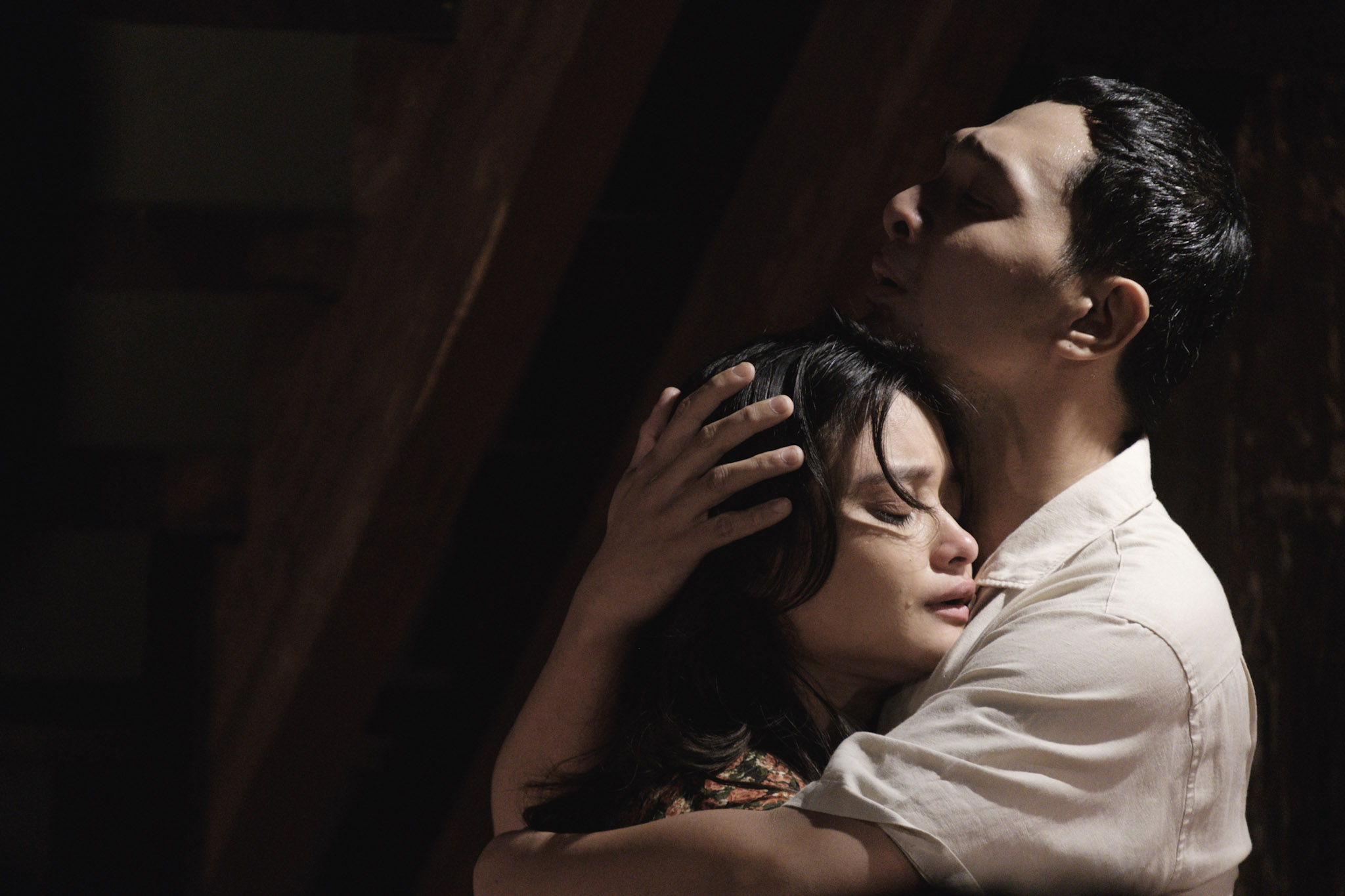
Running at the same time as “Saglit Lang,” “The Moon and the Bakunawa” is very much cut from that same cloth — intimate, a little rough around the edges, but carried by a sincerity you can’t easily dismiss. Both productions feel deeply rooted in personal storytelling, the kind that prioritizes emotional truth over polish. Here, playwright Nitoy Chan Jr. leans into autobiographical material, and under the direction of Roobak Valle, that rawness is translated clearly to the stage.

At the center of the play is a striking metaphor drawn from Filipino folklore: the bakunawa, the serpent said to swallow the moon during an eclipse. Here, it becomes a stand-in for dementia — a force that slowly devours memory, identity, and light itself. It’s not exactly subtle, but it doesn’t need to be. The production makes sure you understand what it’s reaching for, and for the most part, it lands because of how grounded the emotions are.
There are, however, choices that feel slightly out of step. The play, first staged in Perth, Australia, retains English narration even as the dialogue shifts between Ilonggo, Tagalog, and English. In a Manila setting, that decision creates a bit of distance. A Filipino narration might have deepened the immediacy and realism the material is already working hard to build.
But its biggest strength lies in the central performance. If “Saglit Lang” has Capinding, “Bakunawa” has Divina Cavestany.

Once a muse of the late National Artist Rolando Tinio, Cavestany returns to the stage after being away for decades — she was last seen in the early 2000s in a Tanghalang Pilipino production — and the result is quietly remarkable. There’s a presence she carries that doesn’t fade, even when the character’s memory does. You sense, constantly, that something luminous remains beneath the confusion.
It’s the kind of performance that reminds you what great stage acting can do — and in this case, it does a lot of the heavy lifting. Whatever the production lacks in refinement, Cavestany more than compensates with sheer command.
If this production does anything lasting, it should be this: to remind us that she still belongs onstage.
Because in the end, “The Moon and the Bakunawa” may not be perfect — but with Cavestany, it becomes somehow a worthwhile one.
“Saglit Lang” and “The Moon and the Bakunawa” are both on their final weekend with performances. “Saglit Lang” runs at The Mirror Studio Theater, Makati, while “The Moon and the Bakunawa” runs at AIMS Tower, Pasay City.



Leave a Reply