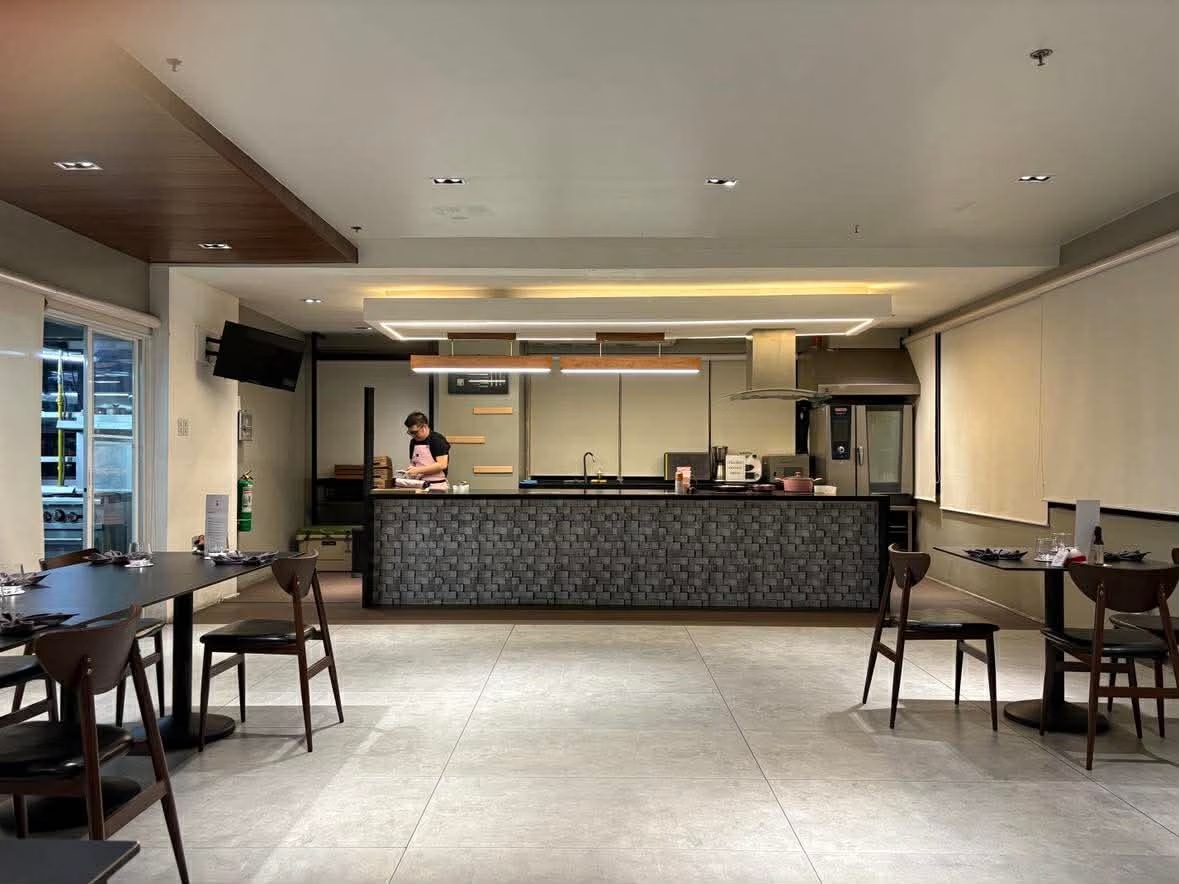
Chef Sharwin Tee has long been a familiar name in the Philippine culinary scene. From his early days as one of the country’s first reality-show chefs to his stint running a restaurant and hosting cooking events, he’s always been in the spotlight.
But with Little Grace, it feels like he has finally found his true voice and calling — not as a celebrity chef, but as a storyteller and custodian of a cuisine that has long been overlooked.
Little Grace is more than a pop-up; it’s a proof of concept for progressive Chinese-Filipino dining.
For decades, when Filipinos spoke of Chinese food, the conversation gravitated toward two extremes: the opulent Cantonese banquets of five-star hotels, with their Peking duck and abalone, or the casual dim sum joints echoing Hong Kong-style tea houses. Rarely did anyone rave about the food that truly defines the Chinoy experience — the comforting dishes served in family homes, the flavors of Binondo’s estero, the humble classics of Ma Mon Luk. This is the cuisine of everyday life, rich in memory but often dismissed as ordinary.

Take the opening act, Tiam Sim, a trio of snacks served in a three-tier lunchbox Chef Sharwin never had as a child but now proudly uses. Each bite is a memory reimagined: a playful camaron rebosado croquet that uses every part of the shrimp, a delicate radish cake crowned with XO sauce, and a meatball from his grandmother’s recipe kissed with homemade banana ketchup. It’s witty, heartfelt, and deeply personal.

The menu unfolds like chapters in a family album. There’s Sibut Tang, a restorative soup made in collaboration with Singapore’s Eu Yan Sang, marrying traditional Chinese herbs with Chef Sharwin’s collagen-rich master broth, suahe, and dragonfruit — a dish that feels like a comforting hug.
Then comes Si Dit Miswa, the birthday noodle soup transformed into a modern Italian pasta-like bowl of angel hair, carrot vinaigrette, blackened cabbage, sous-vide egg, and tobiko, yet still echoing the flavors of Chinoy celebration.

Even the palate cleanser, Pe Bok Ni, surprises with its medicinal undertones, while Tao Meng Tsai turns taho into a savory marvel, complete with sago and muscovado sugar, served cheekily on mahjong tiles.
The beef broccoli course dares to include pickled ampalaya — brilliantly tamed of bitterness — alongside Australian Wagyu slices and a sauce made from smoked oysters and cream, a clever nod to oyster sauce.

As in any lauriat, rice comes last. Chef Sharwin’s Kiam Peng is a loving reconstruction of his grandmother’s recipe, a soulful finale featuring sticky Jasponica rice served paella-style tossed with cubes of lechon Macau, and dabs of mustard leaf pesto and apple mostarda.
The dessert, Amah’s Gulaman, is visually stunning with orange-scented panna cotta, pineapple frozen yogurt and pineapple custard nestled in a hollowed orange, resting on Milo granita.
The meal ends with green tea and brown butter malay ko like a modest, tender goodbye — sweet, familiar, and impossible not to miss once you’ve left.

What makes Little Grace extraordinary is not just its innovation but its sincerity. In an era where “storytelling” in dining often feels contrived, Chef Sharwin’s narrative rings true. This is a menu about growing up Chinoy in the Philippines — about family, memory, and cultural identity. And beyond the plate, it carries purpose: a portion of proceeds helps build classrooms for indigenous children and supports them through college.
With Little Grace, Chef Sharwin doesn’t just cook; he honors a cuisine, giving it gravitas without losing its heart. It is a celebration of heritage, serving up true Michelin-level vibes with the unmistakable flavors of home. For the first time, Chinoy food steps into the fine-dining spotlight, and it feels just right.
Little Grace is located at 3/F Henry Sy Building, University of the Philippines BGC Campus.
This article was originally published on ABS-CBN.com.


Leave a Reply