They say theater is the art of the present, but for me, 2025 was a year of catching up. After health challenges forced me to sideline my traditional yearender for 2024, I returned to the stalls last year with a renewed appetite and an improved mindset.
This “gap year” created a unique perspective for my 2025 list: because several 2024 heavy-hitters staged successful reruns, they are finally getting their due in this belated — but no less enthusiastic — roundup.
In many ways, these reruns were the saving grace of the season. While 2025 was heralded as a busy year for revenge theater, the sheer volume of productions didn’t always translate to quality. Despite the hype, several high-profile shows left me cold; both the much-anticipated “Into the Woods” and the Mike Hanopol musical “Jeproks” were, unfortunately, outright disappointments. In a crowded calendar, it was often the returning hits from the previous year that reminded us what high-caliber theater actually looks like, effectively upping the quality levels for the entire industry.
The real story of 2025, however, unfolded in the second half of the year, as excellence emerged from unexpected places. We witnessed a fascinating shift as theater upstarts upstaged established groups. Ateneo’s Areté transcended its status as a mere venue to become the year’s most vital producer and a true driver of quality.
GMG Productions, known for bringing international touring productions to Manila from “Hamilton” to last year’s “Dear Evan Hansen,” mounted its first show, the star-studded “Come From Away.”

Meanwhile, Barefoot Theatre Collaborative solidified its status as a powerhouse. Beyond their successful “Bar Boys” rerun at Areté, they took a magnificent gamble on the relatively unknown “We Aren’t Kids Anymore.” Thanks to Myke Salomon’s sharp musical direction and a killer cast, they transformed a niche title into one of the most interesting and resonant experiences of the year.
Another vital narrative this year was the healthy, high-caliber crossover of film and TV actors to the live stage. This influx of mainstream talent provided some of the year’s most indelible moments. We saw the continued growth of OG “Bar Boys” stars Benedix Ramos and Omar Uddin, who have truly found their footing on stage, and the rise of CJ Navato as a legitimate theater leading man. Perhaps most surprising was the inspired pairing of Jackie Lou Blanco and Royce Cabrera in “The Foxtrot,” proving that when screen stars commit to the discipline of theater, the results can be electric. And who can forget the luminous stage debut of Angelica Panganiban in Virgin Labfest?
Even with new blood pumping through the scene, 2025 still belonged to Tanghalang Pilipino. Building on its dominance in 2024, the company once again set the pace with the chilling stage adaptation of “Kisapmata,” and capped the year with the effervescent history lesson “Gregoria Lakambini.”
Taken as a whole, 2025 proved to be a strong and rewarding year for Philippine theater — and with what has already been announced, 2026 looks even more promising.
For this year in review, I tried to catch as many productions as I can, with notable omissions such as the shows of Dulaang UP and newcomer Teatro Mulat, and Philippine Stagers Foundation’s “Bonifacio: Ang Supremo.”
10 BEST PRODUCTIONS OF 2025
1. Pingkian
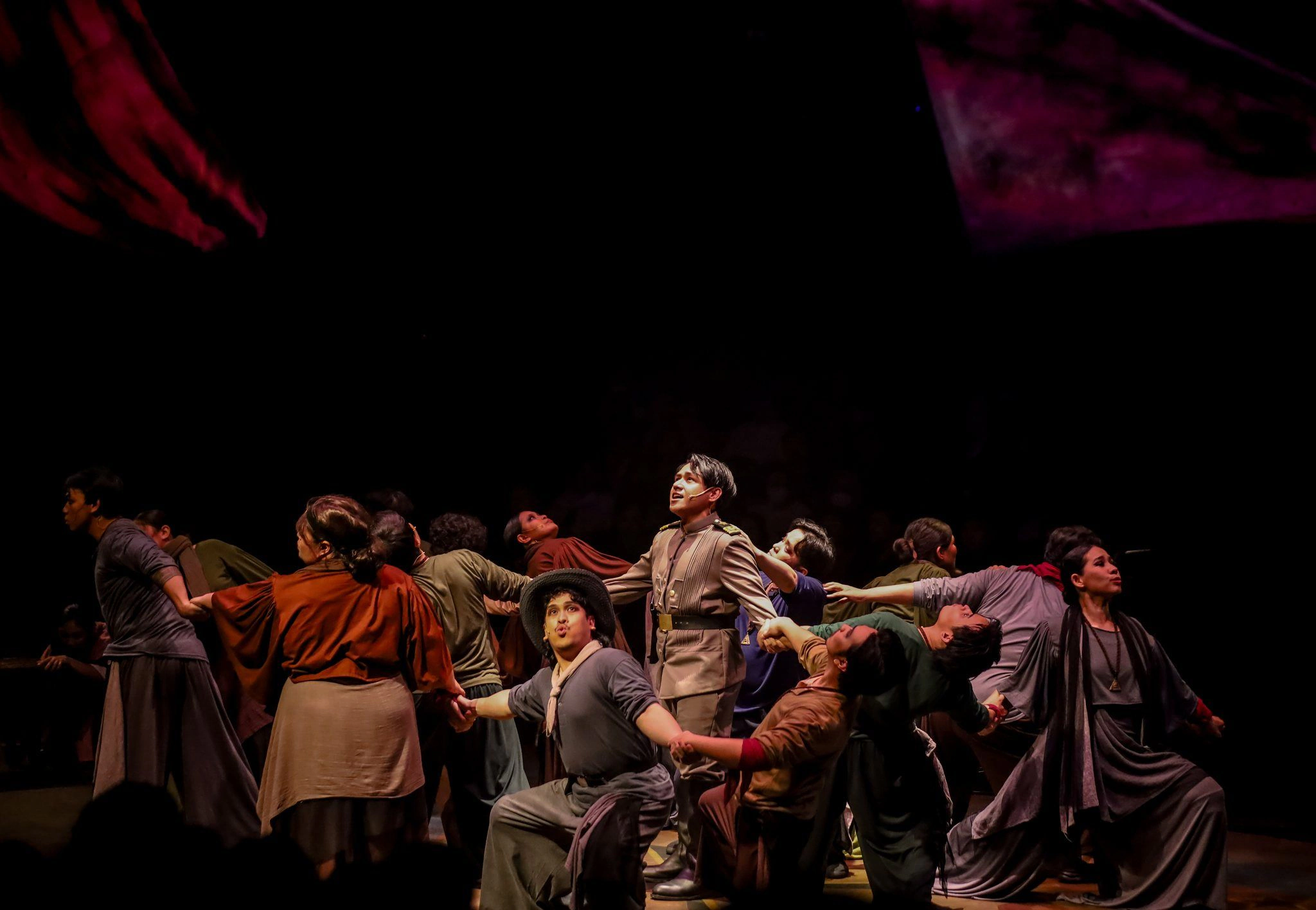
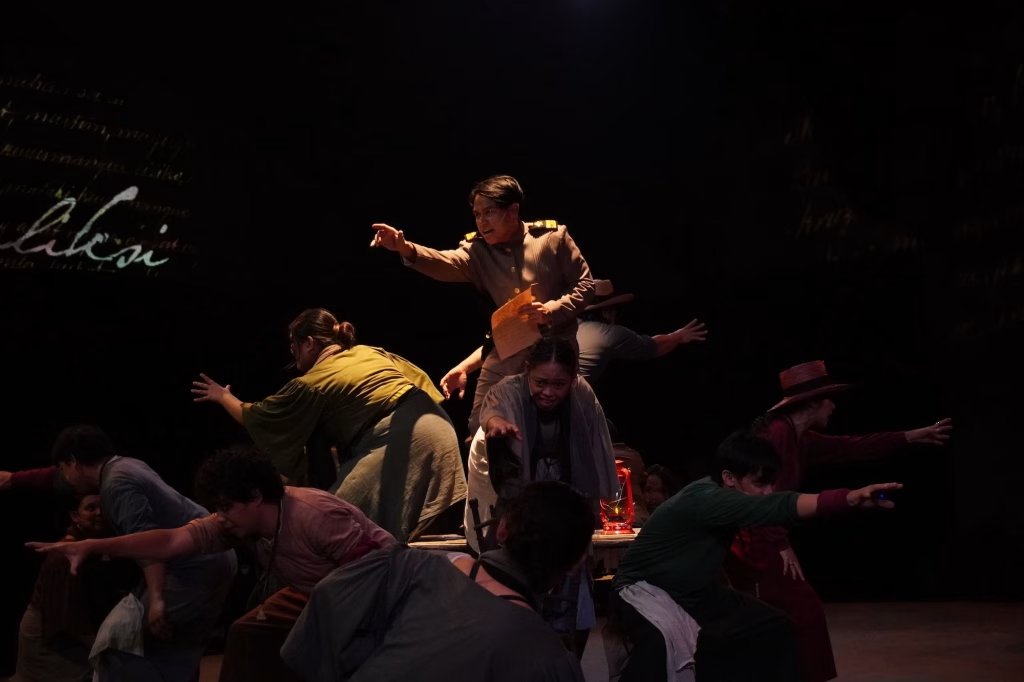
While “Pingkian” arrived fully formed in its initial run, its 2025 season achieved a rare, electric precision. This was historical musical theater distilled to its most potent form — every scene sharpened, every transition purposeful. Anchored by a career-defining performance from Vic Robinson, the production moved with the confidence of a work fully aware of its place in the canon. More than a successful return, “Pingkian” reaffirmed itself as the most vital original Filipino musical of this decade.
2. 3 Upuan
Guelan Luarca’s meditative triptych on grief demonstrated remarkable adaptability across its various stagings. Shifting from the intellectual nuance of its original staging to a state of raw, emotional immediacy, its varying versions proved the sheer resilience of Luarca’s script. Even with a new cast, the play’s exploration of three siblings processing their father’s death felt hauntingly authentic, capable of transforming any space into a site of shared memory.
3. Bar Boys
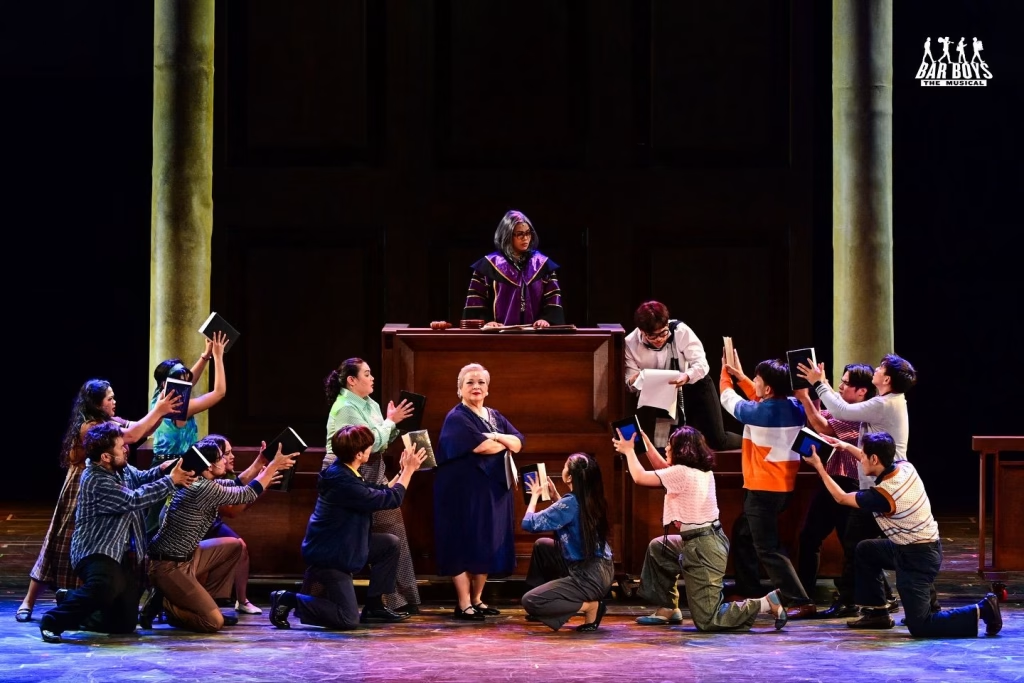
What began as a stage adaptation of a beloved film has evolved into a generation’s cultural battle cry. Book writer Pat Valera and composer Myke Salomon did more than just tell a story about law school; they interrogated the very soul of the Philippine justice system. While the 2024 run felt like a lament for lost idealism, the 2025 “revival” at Areté crackled with active indignation. Tapping into the current zeitgeist of anti-corruption fervor, this iteration transformed from a coming-of-age tale into an essential piece of protest art.
4. Quomodo Desolata Es? Isang Dalamhati
In a year defined by “reimagination,” Guelan Luarca’s deconstruction of Nick Joaquin’s “A Portrait of the Artist as Filipino” was perhaps the most daring. Stripping away the romantic nostalgia usually afforded to Old Manila, this version — working from Jerry Respeto’s translation — emerged as a stark, Greek-style elegy. By utilizing a Greek chorus as literal ghosts of the past, the production turned a beloved classic into a haunting memory play that was as unsettling as it was beautiful.
5. Si Faust
Director Nelsito Gomez delivered a major miracle with “Si Faust,” a sung-through retelling of a literature classic that dispensed with dialogue entirely. By leaning into a high-concept aesthetic and the judicious use of Wolfgang’s rock discography, the production seduced the audience through pure sensory storytelling. It proved that the Goethe legend doesn’t require a traditional libretto when you have stunning visuals and lead performances so mesmerizing they bridge the gap between the classical and the contemporary.

6. Kisapmata
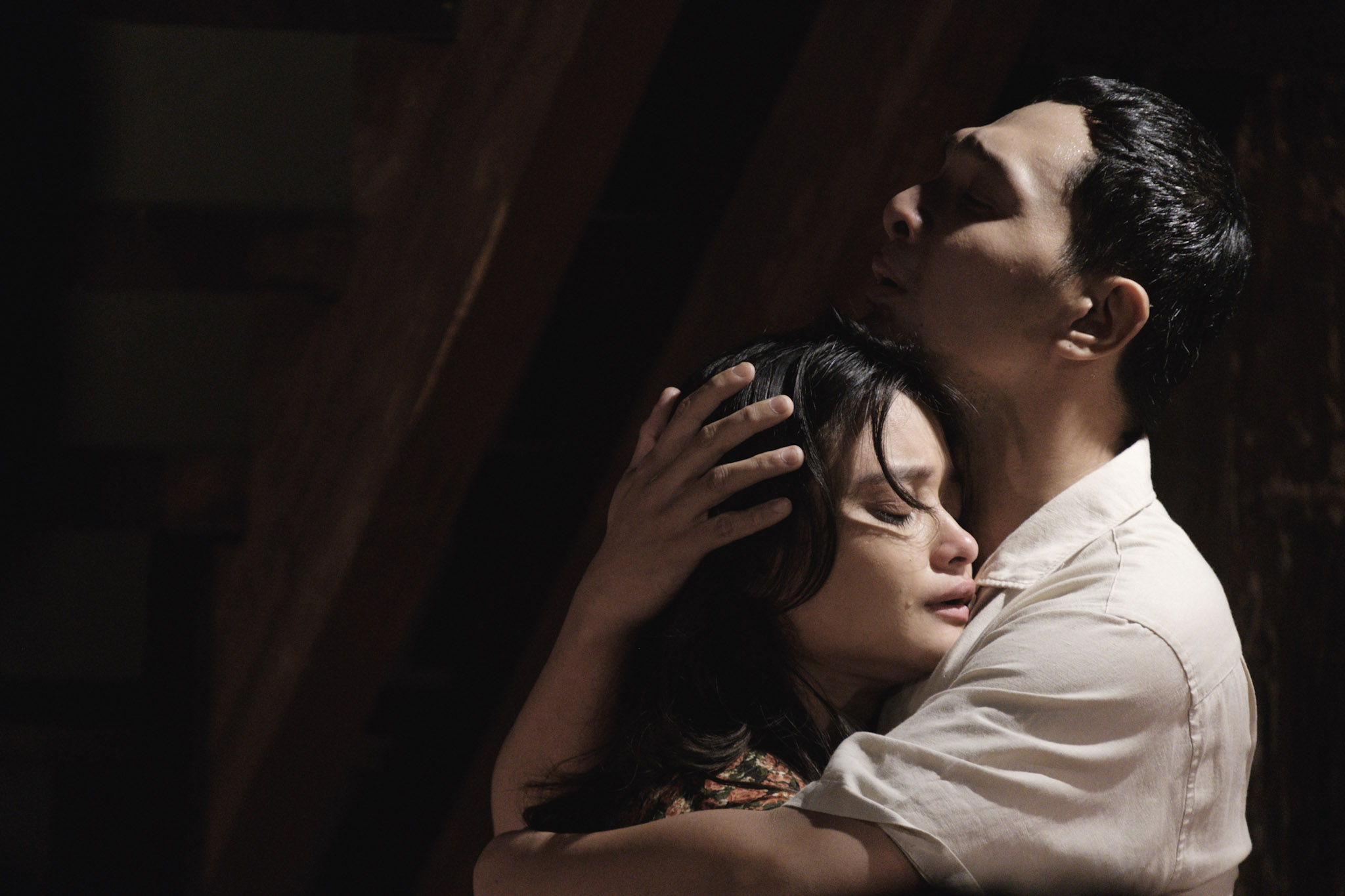
Adapting Mike De Leon’s cinematic masterpiece for the stage is an almost impossible challenge — and Tanghalang Pilipino met it by embracing terror as theatrical language. The production transformed the stage into a suffocating domestic prison, foregrounding the fascist logic embedded in the narrative. Beyond its technical rigor, the adaptation resonated as a grim parable of systemic violence, made chillingly immediate by the collective strength of the Tanghalang Pilipino Actors Company.
7. Come From Away
With little more than tables, chairs, and a virtuosic ensemble, “Come From Away” became a showcase for disciplined storytelling and precise character work. The “Avengers of Philippine Musical Theater” (as the star-studded ensemble was affectionately called) navigated the emotional arc of the material — from post-9/11 disorientation to radical empathy — with remarkable clarity. In resisting spectacle, the production found something deeper: genuine human connection.
8. Gregoria Lakambini
If “Pingkian” is the fire of the revolution, “Gregoria Lakambini” is its heartbeat. This Pinay pop musical presented the life of Oryang de Jesus not as a tragedy, but as a feisty, radio-ready ode to female empowerment. Playwrights Nicanor Tiongson and Eljay Castro Deldoc and composers Nica del Rosario and Matthew Chang achieved the impossible: a show that speaks fluently to Gen Z without a hint of condescension, proving that history can be both ebullient and essential.
9. Sintang Dalisay
Set in Muslim Philippines, this bold retelling of “Romeo and Juliet” was an explosion of color and youthful energy. Despite its student cast, the production was world-class in its execution. The late Salvador Bernal’s set provided a gorgeous backdrop for an ethnic ensemble that remained center-stage throughout. The live scoring and haunting chants didn’t just accompany the action; they drove it, resulting in a production that was visually arresting and culturally resonant.
10. Grace
Watching “Grace” a year after the passing of Floy Quintos allowed for a new kind of appreciation — one stripped of immediate mourning but filled with a deeper respect for his genius. This play, centering on the Lipa apparitions, is a sophisticated interrogation of faith, race, and Vatican politics. It managed to balance intellectual rigor with a genuine sense of spiritual awe, culminating in a shower of rose petals that served as a fitting, beautiful final bow for one of our greatest playwrights.
Honorable mentions: “Shrek,” “We Aren’t Kids Anymore,” “Dagitab,” “Side Show”
10 BEST PERFORMANCES OF 2025
1. Jonathan Tadioan, Lhorvie Nuevo-Tadioan, Marco Viana, and Toni Go-Yadao in ‘Kisapmata’
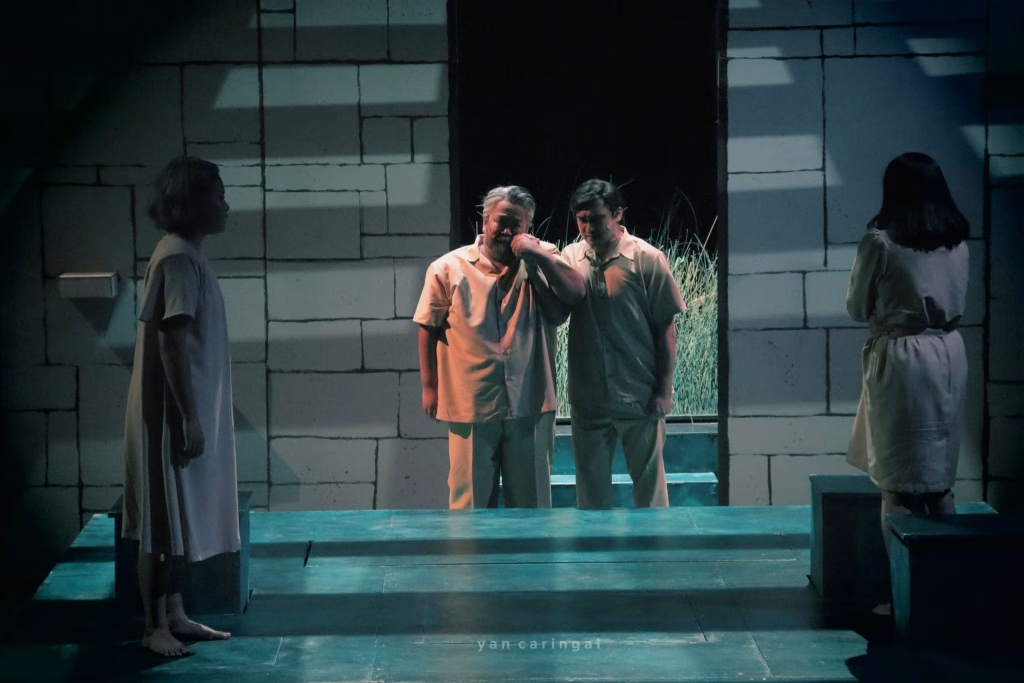
If 2025 had a defining performance trend, it was the resurgence of the ensemble — and no production embodied this more fully than “Kisapmata.” With only four characters onstage, Tanghalang Pilipino placed its senior Actors Company members front and center, and the result was revelatory.
Tadioan, Nuevo-Tadioan, Viana, and Go-Yadao did not merely perform alongside one another; they functioned as a single organism. Each actor’s individual mastery was evident, but what made the work extraordinary was the collective discipline — the calibrated listening, the mutual restraint, the absolute trust. Watching them together was humbling: a master class in how great actors disappear into the needs of the group. This was ensemble acting at its highest, most uncompromising level.
2. Jojit Lorenzo, JC Santos, Martha Comia, Paolo O’Hara, Cris Pasturan, and Jasmine Curtis-Smith in ‘3 Upuan’
Few productions in recent memory have demonstrated how casting can fundamentally recalibrate a play’s emotional temperature as clearly as “3 Upuan.”
The original trio — Jojit Lorenzo, JC Santos, and Martha Comia — defined the work’s first life with remarkable clarity and restraint. Lorenzo brought quiet authority and emotional intelligence to Jers, grounding the play with the weight of an older sibling who has learned to intellectualize grief. Santos, despite his stature as a film star, approached Jack with humility and discipline, while Comia gave one of her finest performances to date, navigating Jai’s vulnerability with sensitivity and control. Together, the original cast leaned into the play’s philosophical underpinnings, allowing its ideas about art, memory, and loss to breathe.
The latest run, however, revealed an entirely different facet of the same text. With Cris Pasturan taking over as Jack, Jasmine Curtis-Smith as Jai, and Paolo O’Hara as Jers, the production shifted decisively toward emotional immediacy. Curtis-Smith emerged as a mesmerizing presence, allowing the audience to witness grief unfolding in real time. Pasturan and O’Hara brought a warmer, more tactile energy — less academic, more instinctive — creating a sibling dynamic that felt lived-in and unguarded.
Taken together, both casts affirm the durability of Luarca’s writing: one illuminating the play’s intellectual rigor, the other unlocking its raw emotional core.
3. Alex Diaz, Benedix Ramos, Jerom Canlas, and Omar Uddin in ‘Bar Boys’
While “Bar Boys” boasts several standout featured performances, its beating heart remains its quartet. As the titular “Fab Four,” Diaz, Ramos, Canlas, and Uddin delivered performances defined by chemistry, ease, and emotional credibility. Their bond — playful, combustible, and sincere — felt instantly legible, recalling the youthful electricity of “Ang Huling El Bimbo.”
What makes this ensemble particularly striking is how seamlessly actors from mainstream film and television backgrounds adapted to the demands of live musical theater. Though not obvious stage regulars, together, they felt perfectly cast. These were breakthrough performances, and Barefoot’s eye for talent was rewarded with a quartet that anchored one of the year’s most culturally resonant productions.
4. Leo Rialp in ‘Grace’
Leo Rialp’s portrayal of Monsignor Edigio Vagnozzi was nothing short of commanding. Though not the play’s central figure, Rialp dominated the stage with the confidence of a seasoned antagonist in the mold of Salieri in “Amadeus.” His towering presence, crisp accent, and controlled menace provided “Grace” with its dramatic spine.
In a play preoccupied with faith and miracles, Rialp supplied conflict and moral friction. His performance was intimidating without caricature, chilling without excess. Every entrance recalibrated the room. It was a reminder of how a great supporting performance can quietly become the axis on which an entire production turns.
5. Maita Ponce in ‘Si Faust’
Maita Ponce emerged as one of the year’s most thrilling rediscoveries. Following her earlier appearance in “Quomodo Desolata Es?”, she returned in “Si Faust” as a revelation — an electrifying Mephistopheles rendered with rock-star ferocity.
Ponce possessed the spunk, vocal power, and unapologetic confidence the role demands, forging scorching chemistry with Joseton Vergel de Dios. Director Nelsito Gomez’s decision to cast Mephisto as female proved inspired: Ponce’s presence redefined temptation as something playful, dangerous, and irresistibly alive. She did not perform evil; she embodied it.

6. Lance Reblando in ‘Walang Aray’
Any skepticism surrounding Lance Reblando’s casting evaporated the moment she stepped onstage. This was not stunt casting, nor was it camp. Reblando delivered a fully realized musical theater ingénue — precise, grounded, and emotionally truthful.
Her performance avoided exaggeration, opting instead for nuance and sincerity. She captured the vanity and vulnerability of a spoiled star with elegance, proving that representation need not come at the expense of craft.
This was a landmark performance — not because of who Reblando is, but because of how impeccably she inhabited the role.
7. Marvin Ong in ‘Side Show’
Marvin Ong’s return to the stage continues to gather momentum, but “Side Show” marked his most booming statement yet. In a production filled with strong performances, Ong’s work stood out for its dramatic control and bombast.
His rendition of “You Should Be Loved” was utterly devastating — easily the year’s best singular musical performance — earning its ovations not just for his vocal power but his emotional honesty. Ong never appeared to “perform”; he simply existed within the role. His humanity deepened the show’s themes of visibility and compassion, strengthening the entire production from within.
8. Nikki Valdez in ‘Next to Normal’
Nikki Valdez’s return to theater was marked not by spectacle, but by bravery. As Diana, she navigated one of musical theater’s most psychologically demanding roles with raw honesty. While not the most vocally virtuosic Diana audiences might encounter, Valdez compensated with devastating emotional clarity.
Her portrayal captured the slow unraveling of a mind under siege, making the character’s disintegration feel intimate and painfully real. It was a reminder that “Next to Normal” is as much an acting challenge as a musical one — and Valdez met it head-on.
9. Jackie Lou Blanco in ‘The Foxtrot’
Jackie Lou Blanco has long been admired for her acting, but her return as Anna in “The Foxtrot” — first opposite JC Santos, and then Royce Cabrera — revealed new layers. While her original performance already elicited empathy, the revised pairing sharpened the play’s tensions around class, age, and power. She rendered loneliness not as melodrama, but as quiet desperation — measured yet deeply felt.
10. Bart Guingona in ‘Via Dolorosa’
Bart Guingona’s return to the stage in “Via Dolorosa” was nothing short of triumphant. Tackling David Hare’s demanding one-man play on Israeli-Palestinian relations, Guingona inhabited multiple characters across cultures, classes, and political divides with astonishing clarity.
This was a performance fueled by intellect, empathy, and lived political awareness. Guingona navigated the script’s complexities with precision, reasserting himself as one of Manila’s most formidable theater artists. This was not merely a comeback — it was a reestablishment.
Honorable mentions: Vic Robinson (“Pingkian”), Ron Capinding (“Kaliwaan”), Krystal Kane and Molly Langley (“Side Show”), the cast of “Come From Away,” Sheila Francisco (“Bar Boys”), Royce Cabrera (“The Foxtrot”), Jojit Lorenzo and Benedix Ramos (“Dagitab”), Dippy Arceo (“Elecktra”)
CREATIVE AND TECHNICAL ACHIEVEMENT
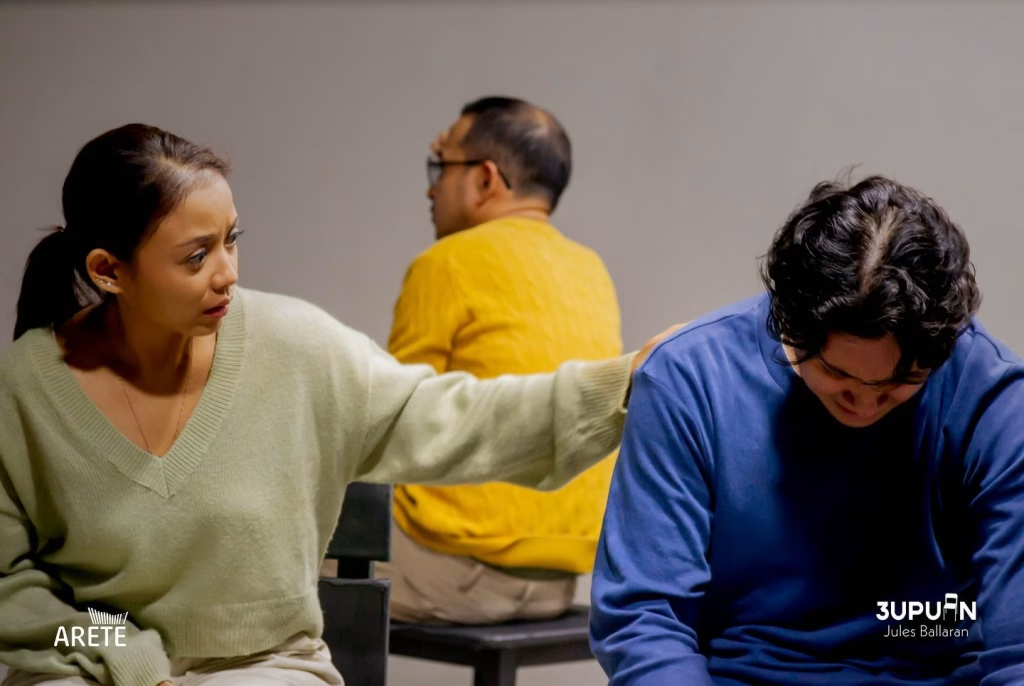
Best Play (Original, Adaptation or Translation): Guelan Luarca (“3 Upuan”)
Honorable mentions: Guelan Luarca (“Kisapmata”), Floy Quintos (“Grace”), Ivan Gentolizo (“Unang Araw”), Ade Valenzona (“Polar Coordinates”), Rafael Jimenez (“Patintero sa Ayala Avenue”)
Best Book of a Musical (Original, Adaptation or Translation): Juan Ekis (“Pingkian”)
Honorable mention: Pat Valera (“Bar Boys”), Nicanor Tiongson and Eljay Castro Deldoc (“Gregoria Lakambini”)
Best Direction: Nelsito Gomez (“Si Faust”)
Honorable mentions: Guelan Luarca (“Quomodo Desolata Es” and “Dagitab”), Dexter Santos (“Shrek”), Michael Williams (“Come From Away”), Mikko Angeles (“Bar Boys”), Jenny Jamora (“Pingkian”)
Best Score: Ejay Yatco (“Pingkian”)
Honorable mentions: Myke Salomon (“Bar Boys”), Nica del Rosario and Matthew Chang (“Gregoria Lakambini”)
Best Choreography: Stephen Vinas (“Shrek”)
Honorable mentions: Jomelle Era (“Bar Boys” and “Pingkian”), JM Cabling (“Side Show”), Jim Ferrer (“Si Faust”), Matthew Santamaria (“Sintang Dalisay”), Stephen Vinas (“Delia D”)
Best Musical Direction: Kabaitan Bautista (“Si Faust”)
Honorable mentions: Myke Salomon (“We Aren’t Kids Anymore” and “Bar Boys”), Edru Abraham and Jayson ‘Dyandi’ Gildore (“Sintang Dalisay”), Ejay Yatco (“Pingkian”)
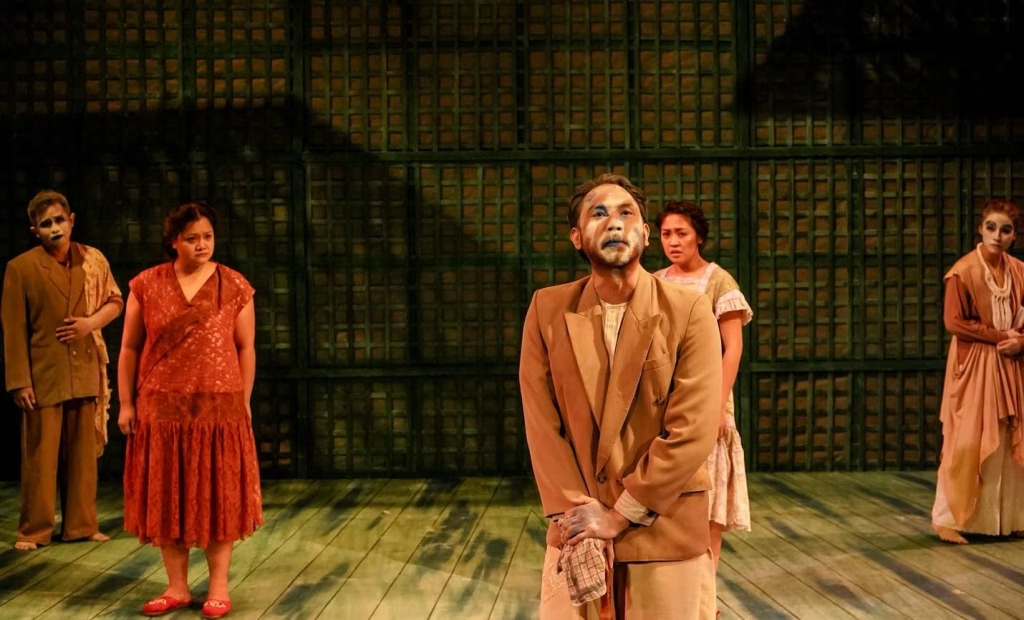
Best Set Design: D Cortezano (“Quomodo Desolata Es?”)
Honorable mentions: Sarah Facuri (“Si Faust”), Salvador Bernal and Tata Tuviera (“Sintang Dalisay”), Joey Mendoza (“Kisapmata”), Julio Garcia (“Bar Boys”), Mark Dalacat (“Side Show”), D Cortezano (“Dagitab”), Lawyn Cruz (“Shrek”), Tuxqs Rutaquio (“Anino sa Likod ng Buwan”)
Best Lighting Design: Jethro Nibaten (“Quomodo Desolata Es?”)
Honorable mentions: Jethro Nibaten (“Si Faust” and “Dagitab”), D Cortezano (“Kisapmata”), John Batalla (“Delia D” and “Anino sa Likod ng Buwan”), Harry Tabner (“Come From Away”), Gabo Tolentino (“Side Show”),
Best Costume Design: Carlos Siongco (“Side Show”)
Honorable mentions: Marco Viana (“Gregoria Lakambini”), Mitoy Sta. Ana (“Delia D”), Eric Pineda (“Shrek”), Ali Figueroa (“Quomodo Desolata Es?”)
Best Sound Design: John Robert Yam (“Sintang Dalisay”)
Honorable mentions: Kabaitan Bautista (“Si Faust”), Arvy Dimaculangan (“Kisapmata”), John Robert Yam (“Quomodo Desolata Es”), Dani Arceo (“Elecktra”), TJ Ramos (“Anino sa Likod ng Buwan”)
This article was originally published on ABS-CBN News.

Leave a Reply