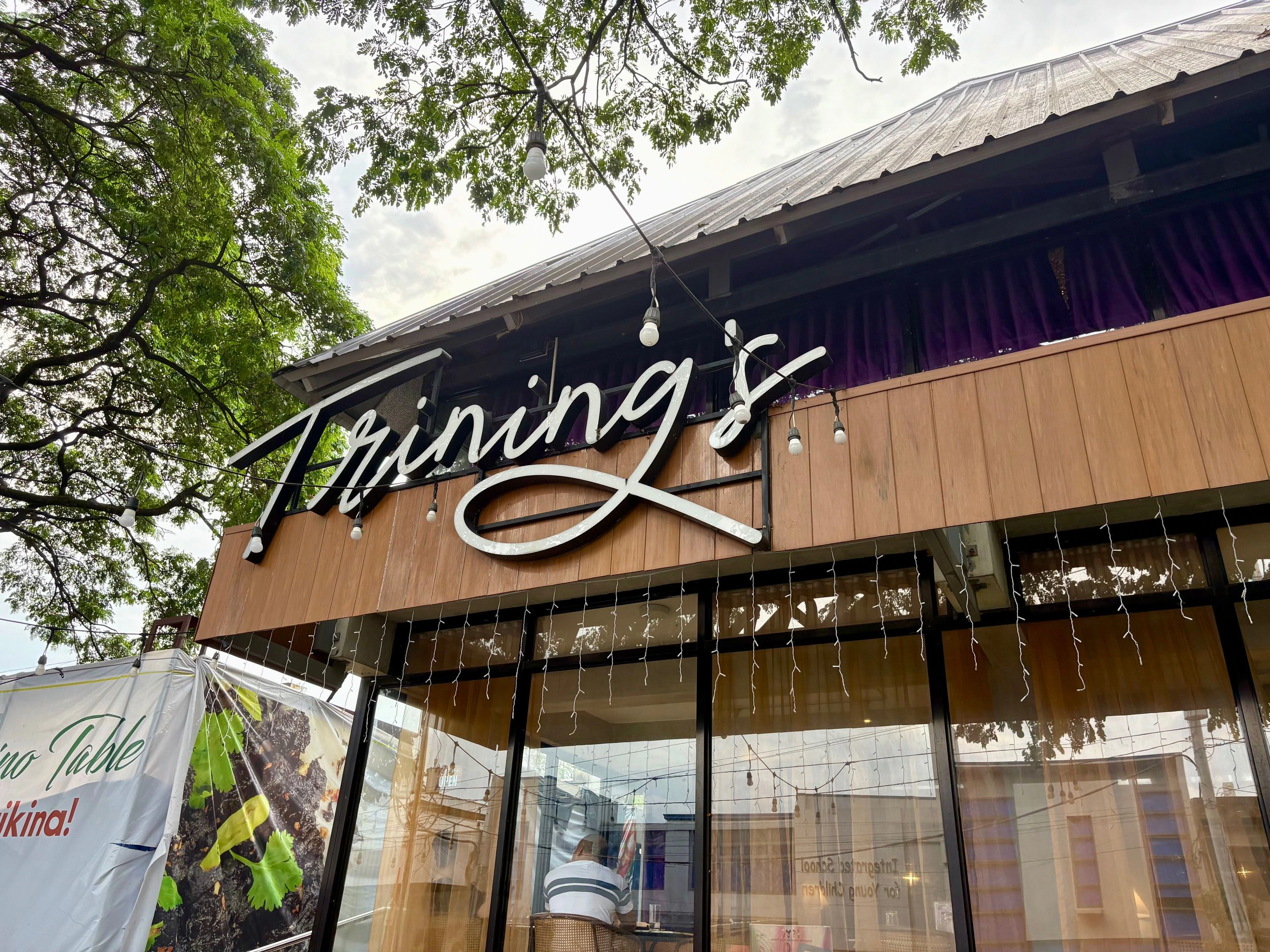
Trining’s Kitchen Stories isn’t just about food — it’s about purpose.
Every time a typhoon hits, the Marikina restaurant transforms its al fresco space into a volunteer kitchen, serving hot meals to evacuees and affected communities. At the center of these efforts is chef-owner Jayson Mauliit, who proudly identifies more as a “food dignity advocate” than a restaurateur.
That sense of purpose defines Trining’s. In today’s Gen Z-driven culture, where advocacy and storytelling shape even dining choices, the restaurant has built a reputation as a place where food and compassion coexist.
But with Trining’s, the food is every bit as good as the mission behind it.
The restaurant sits quietly in a less-traveled part of Marikina, tucked away from the bustle of A. Bonifacio Avenue. The moment you step inside, it feels like a retreat — unfussy, casual, yet still special, like those provincial eateries from years past, the kind you’d visit with family for special occasions or after Sunday mass.
The restaurant is named after Mauliit’s grandmother, who passed away during the pandemic. Opening the restaurant became his way of honoring her memory through food. The “Kitchen Stories” part isn’t just branding; it reflects a deeper purpose of remembering, sharing, and healing through meals and community.

That same spirit of generosity extends to the table itself.
The portions at Trining’s are overly generous. Solo servings can easily feed two, and family platters are ideal for group dining. It’s the kind of restaurant where sharing isn’t just encouraged but expected — in true Filipino fashion.
A taste of Ilocos in Marikina
For Mauliit, honoring legacy also means preserving his Ilocano roots. In Metro Manila, Ilocano cuisine is often reduced to bagnet and Vigan empanada. At Trining’s, it takes center stage.
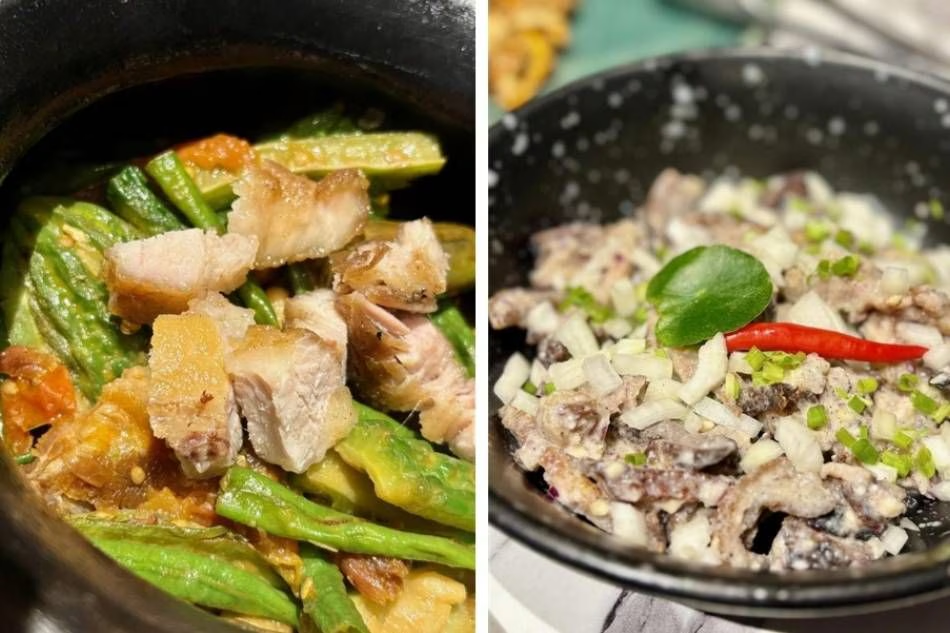
A section of the menu called Legacy Recipes showcases his grandmother’s dishes, led by a standout pinakbet (P580 for solo) served in a palayok — not for show, but as part of the story. True to Ilocano tradition, it’s cooked without squash, onion, or alamang, using instead a distinct bagoong (munamun) that delivers depth without overwhelming saltiness. The vegetables are fresh and never overdone, the ampalaya small and perfectly bitter — a flavor profile often misunderstood but beautifully balanced here with the bagnet chunks.
The dinakdakan (P410 for solo) also impresses — creamy, smoky, and distinctly Ilocano. Its richness doesn’t come from mayonnaise, as Manila versions often do, but from pig’s brain, which gives the dish its authentic texture and subtle savoriness.
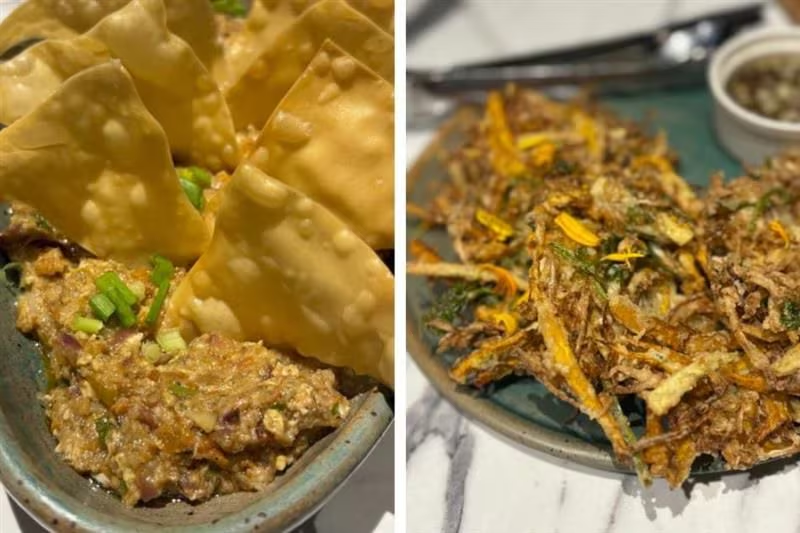
While rooted in heritage, Trining’s isn’t afraid to experiment. Their poqui-poqui (P300 for solo), traditionally a humble roasted eggplant side dish, is reimagined as an appetizer. Served with crisp molo wrappers for scooping, it becomes something between a dip and a bar snack — playful yet true to its origins.
Other crowd-pleasers include the crispy tintadong pusit (P530 for solo), equally at home as pulutan or viand; and the okoy (P410 for solo), which recalls Japanese vegetable tempura but gains depth from a spicy vinegar dip.
Comfort on a plate

Then there’s the kare-kare, perhaps the most nostalgic of all. It’s made the old-fashioned way, with roasted peanuts instead of peanut butter, yielding a deep, nutty flavor. The dish comes with a spicy Szechuan alamang that adds a bold contrast, with versions that range from the classic tripe and oxtail (P450 for solo) to indulgent options featuring bagnet or crispy pata.
For something simpler, the miki (P290 for solo), a comforting Ilocano noodle dish, makes for the perfect merienda. It’s warm, hearty, and deeply satisfying — the kind of food that reminds you of less complicated times.
After our visit, my friends returned without me and raved about the pancit canton (P430 for solo) and gambas (P480 for solo) — made not with small shrimps but large prawns like a proper main dish — reflective of Trining’s belief in giving guests more than what’s expected.
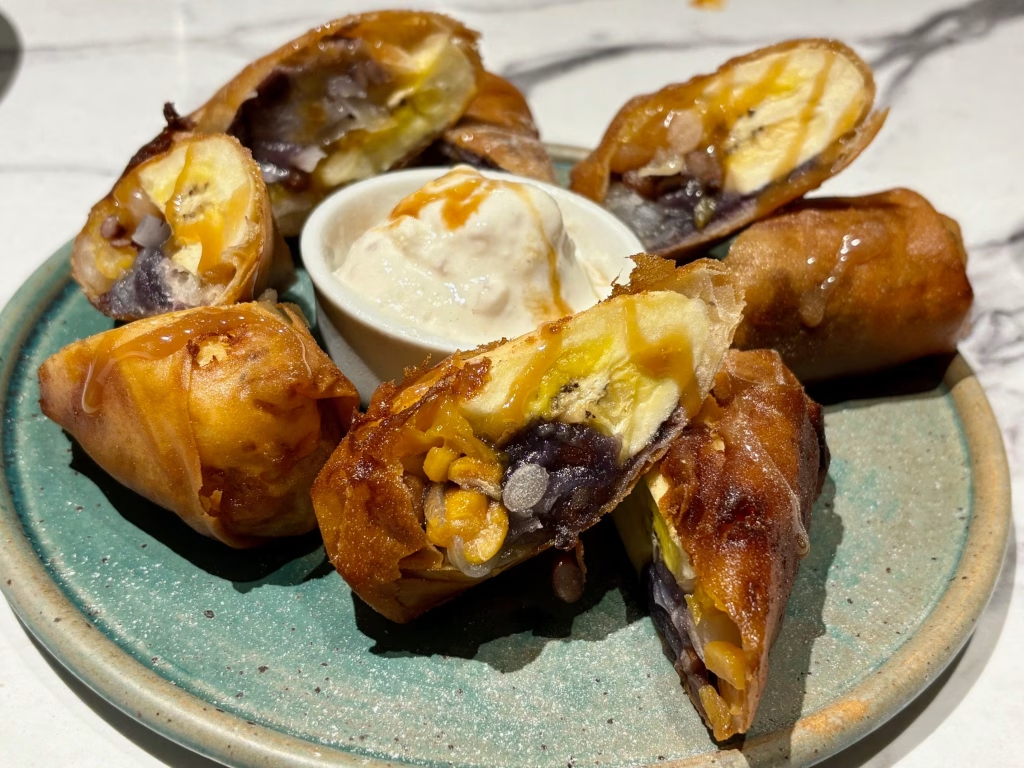
Desserts are few but thoughtful. The halo-halo turon (dubbed Tupperware Favorite, P430 for selfie) is an ingenious twist — all the classic halo-halo ingredients wrapped like lumpia and served with ice cream. It’s whimsical yet nostalgic, the kind of ending that leaves you smiling.
We skipped the samalamig this time, but that just gives us a reason to return.
At Trining’s Kitchen Stories, food is never just about flavor. It’s a space where feeding others is both literal and symbolic. Whether it’s serving evacuees during typhoons or reviving Ilocano flavors often corrupted in the capital, Mauliit reminds us that food can nourish beyond the table.
Ultimately, Trining’s isn’t just a restaurant. It’s a testament to the idea that when food carries purpose, every meal becomes a story worth telling.
Trining’s Kitchen Stories is located along G. Fernando Avenue, Marikina, Metro Manila. Open daily from 11 a.m. to 10 p.m. (10 a.m. on Saturday and Sunday).
This article was originally published on ABS-CBN News.


Leave a Reply